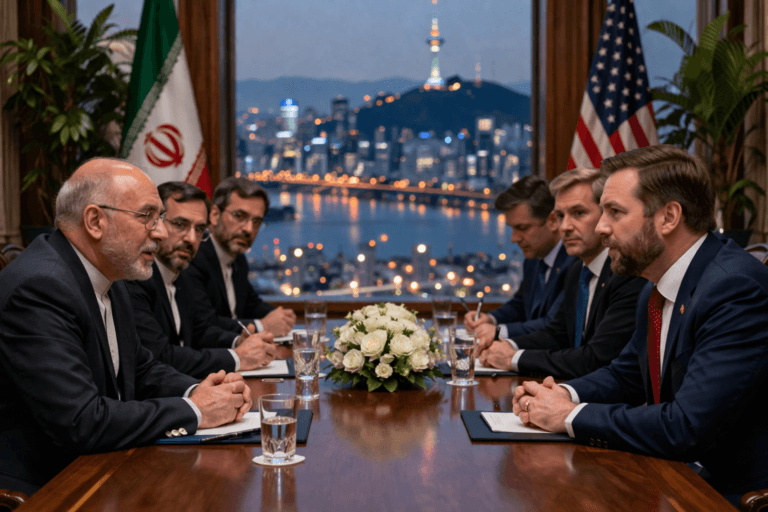
Tehran, Iran – In a dramatic development that could reshape the geopolitical landscape of the Middle East, the Iranian Students’ News Agency (ISNA) reported that a high-level delegation is heading to the Pakistani capital, Islamabad. The delegation will hold a crucial round of direct negotiations with the United States on Friday, April 11.
High-level representation
According to the agency’s report, the biggest surprise lies in the level of representation; the Iranian delegation will be headed by Mohammad Bagher Ghalibaf, Speaker of the Islamic Consultative Assembly (Parliament). This gives the impression of a direct mandate and broad authority to make sovereign decisions. In contrast, the report confirmed that the United States will send a delegation headed by Vice President J.D. Vance. This move is seen as evidence of the Trump administration’s seriousness in reaching a comprehensive settlement that transcends traditional diplomatic frameworks.
The Ten-Point Plan: Beyond Nuclear
These talks are not limited to the nuclear issue alone, but are based on a 10-point Iranian proposal, described by observers as “comprehensive and bold.” ISNA explained that the framework for negotiations will address the following contentious issues:
Dismantling the sanctions regime: The Iranian demand is not limited to the nuclear agreement, but extends to include the “primary and secondary sanctions” that have been imposed over the past 45 years.
Regional security: Formulating new understandings that ensure the stability of the region and reduce military tensions.
Economic guarantees: Stipulating mechanisms to ensure that Washington does not withdraw in the future from any commitments that are agreed upon.
Time and place indications
The choice of Islamabad as the venue for this meeting reinforces Pakistan’s role as a trusted regional mediator between the two sides. Analysts believe that Qalibaf’s leadership of the delegation—he is considered a conservative and has close ties to the highest decision-making circles—aims to preempt any internal opposition in Tehran. Conversely, Vance’s presence sends a message from the White House that the upcoming agreement will be a “presidential agreement,” bearing the weight of the current US administration. World capitals are awaiting the outcome of the “Islamabad Friday” talks, with cautious optimism that these negotiations will end decades of economic and political hostility. Many also hope they will usher in a new era of regional balance of power.