
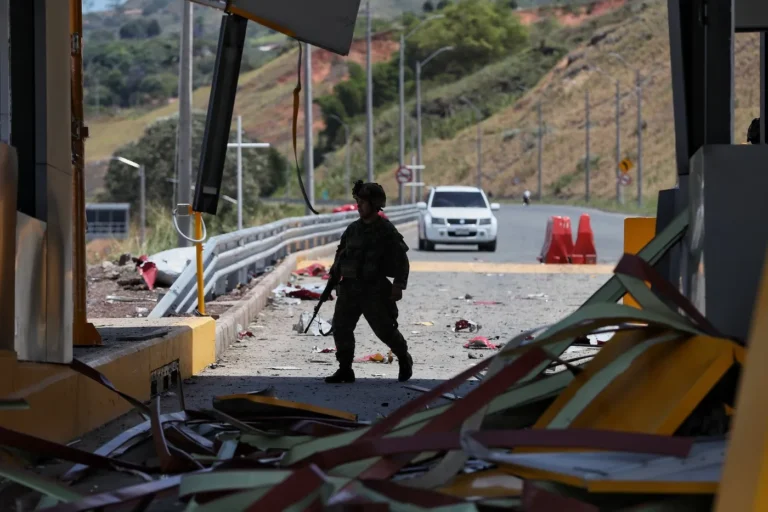
Bogota, Colombia – Colombia experienced a sharp escalation in security risks on the first day of its new presidential term, following two attacks and explosions that caused widespread property damage across targeted areas. Consequently, these violent incidents highlight the severe security challenges and immediate operational hurdles confronting the incoming administration.
Furthermore, field reports indicate that the blasts inflicted substantial structural damage on buildings and infrastructure, stoking political and public anxiety over potential instability. As a result, national security forces elevated threat levels and intensified protective measures across key regions while initiating sweeping search operations and forensic investigations to identify those responsible.
Criminal Networks and State Authority Challenges
On the other hand, the attacks occur as the nation attempts to navigate a delicate political transition, raising fears that armed insurgent groups and drug-trafficking cartels may exploit the political shift to expand their operational reach. Specifically, the new government faces mounting pressure to reassert state control over volatile provinces and curb the influence of organized crime.
Additionally, public demands are intensifying for a decisive national security framework capable of neutralizing illegal armed factions and safeguarding communities. Consequently, the findings of ongoing investigations will serve as a crucial benchmark for the administration’s capacity to contain regional violence and prevent further attacks in the coming days.
Finally, the inaugural-day explosions place counter-terrorism and anti-gang strategies at the forefront of Colombia’s national policy agenda. Ultimately, incoming security responses and enforcement measures will prove decisive in shaping the country’s broader political and security trajectory.