- From support to capacity building
- Saudi Arabia: The first front outside Yemen
- Turning to the Red Sea
- Israel enters the circle of targets
- Why is Yemen important to Iran?
- The Houthis and the war with Iran
- Are the Houthis acting on direct Iranian orders?
- Hormuz and Bab el-Mandeb
- From local ally to regional player
Aden, Yemen – The relationship between Iran and the Houthi group in Yemen has evolved over more than a decade, from limited contact and support to a military partnership that has enabled the group to acquire advanced capabilities in missiles, drones, and anti-ship weapons. Prior to this, Yemen had become one of the most prominent fronts in the regional conflict between Iran, Israel, and the United States.
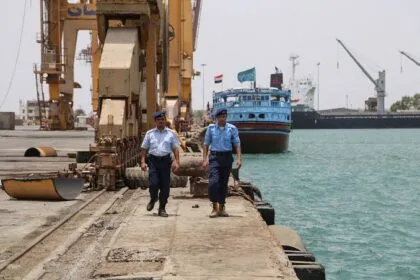
The Houthis’ capabilities have become a significant military asset for Tehran, particularly given the group’s location on Yemen’s western coast overlooking the Red Sea and its proximity to the Bab al-Mandab Strait, a crucial maritime chokepoint connecting the Red Sea to the Gulf of Aden and the Indian Ocean. Furthermore, the US Defense Intelligence Agency confirms that Iran has provided the Houthis with advanced weaponry, technology, and training. Iranian support has also contributed to the development of the group’s missile, naval, and drone capabilities. The agency has also documented the Houthis’ use of Iranian-made weapons and components in attacks carried out both within Yemen and against regional targets.
From support to capacity building
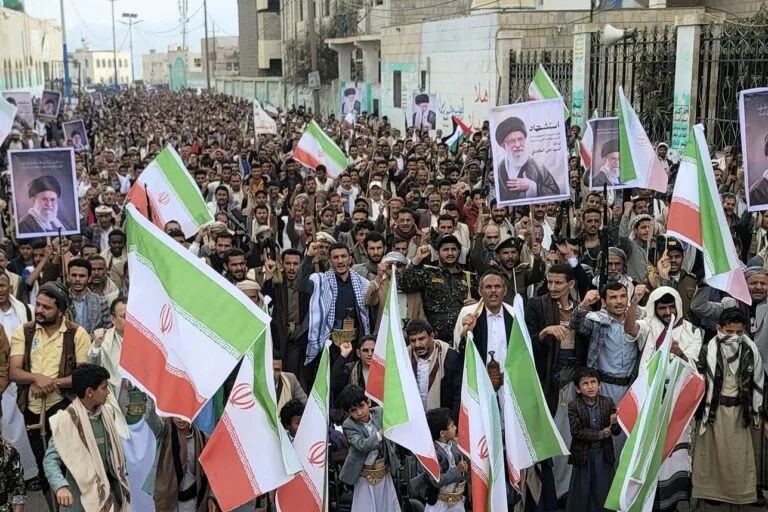
The relationship between Tehran and the Houthis began to develop significantly before the group seized control of Sana’a in 2014. It then expanded with the outbreak of the Yemeni war and the intervention of the Saudi-led coalition in 2015. As the war progressed, the Houthis’ capabilities gradually shifted from relying primarily on conventional weapons and ground combat to employing ballistic missiles, drones, and anti-ship missiles. Consequently, these capabilities enabled them to launch attacks at long ranges both within and outside Yemen.
US and UN reports indicate links between weapons used by the Houthis and Iranian-made components, and there have been reports of interceptions of weapons and equipment shipments bound for Yemen. Additionally, the US Defense Intelligence Agency says the United States and its partners have intercepted several Iranian arms shipments destined for the Houthis, including missile components, drones, and other weapons.
Saudi Arabia: The first front outside Yemen
Saudi Arabia has been one of the main battlegrounds against the Houthis during the years of the Yemeni war. The group has used ballistic missiles and drones to target sites and facilities within the Kingdom, bringing part of the conflict onto Saudi soil. As the range of the weapons used has increased, energy facilities, airports, and military sites have become within the Houthi threat. Consequently, Saudi Arabia has bolstered its air defense systems to intercept missiles and drones launched from Yemen. For Iran, these capabilities have provided the Houthis with the ability to exert military pressure on Saudi Arabia from the south, without Iranian forces being directly involved in most of these attacks.
Turning to the Red Sea
The relationship between Iran and the Houthis underwent a significant shift after the outbreak of the Gaza war in October 2013, when the group announced it had begun targeting ships it claimed were linked to Israel or bound for Israeli ports. The attacks quickly expanded to include vessels associated with the United States and other countries. This resulted in disruptions to shipping in the Red Sea and increased the risks faced by commercial vessels transiting the region. The US Defense Intelligence Agency stated that the Houthis used anti-ship missiles, drones, explosive-laden boats, and other weapons in their attacks on shipping in the Red Sea and the Gulf of Aden. The continued attacks also prompted international shipping companies to reroute some vessels away from the Red Sea, opting for longer routes around the Cape of Good Hope, thus increasing transit times, shipping costs, and insurance premiums.
Israel enters the circle of targets
Houthi operations were not limited to maritime activity; the group also announced missile and drone attacks targeting Israel. In July 2024, a drone launched from Yemen reached Tel Aviv, killing one person and injuring others. Israel later stated that the drone used was of Iranian manufacture. As the conflict escalated, Yemen became one of the more distant fronts from which Israel could be targeted, alongside other Iranian-linked fronts in Lebanon, Iraq, and Syria.
Why is Yemen important to Iran?
Yemen’s importance to Tehran stems from two main factors: its geographical location and the Houthis’ possession of missile and naval capabilities that allow them to threaten distant targets. The group’s proximity to the Bab al-Mandab Strait gives it the potential to influence one of the world’s major maritime trade routes. Similarly, the possession of missiles and drones allows them to target locations beyond the traditional Yemeni battlefield. This differs from the Strait of Hormuz, which falls under Iran’s direct geographical control. Therefore, having an armed ally of Tehran near the Bab al-Mandab Strait provides it with an additional capacity to influence maritime traffic between the Red Sea and the Indian Ocean.
The Houthis and the war with Iran
As the confrontation between Iran, Israel, and the United States escalated in 2016, Houthi operations became a more visible part of the regional military landscape. The Houthis recently claimed responsibility for attacks against Israeli and Saudi targets, while also continuing to pose threats to shipping in the Red Sea. Furthermore, reports emerged of increased Iranian support for the Houthis, including personnel and equipment related to missiles and drones, amidst the ongoing conflict surrounding Iran.
Tehran denies providing direct military support in some cases, while US and regional sources confirm the existence of long-standing military cooperation between the two sides. On August 9, 2026, the Houthis announced they had targeted gatherings and weapons depots they claimed were supported by Saudi Arabia in the Mocha area of southwestern Yemen, using ballistic missiles and drones.
The group’s military spokesman, Yahya Saree, said the attack, according to the group’s account, resulted in widespread destruction of equipment and weapons, and caused deaths and injuries, including Saudis. The extent of the damage and the number of casualties claimed by the group have not yet been independently verified. Additionally, on the same day, the group claimed responsibility for a drone attack on an Aramco facility in Jazan, southern Saudi Arabia. Saudi authorities announced that a fire at the facility had been brought under control and that there were no injuries.
Are the Houthis acting on direct Iranian orders?
Despite US and UN evidence of Iranian support for the Houthis, this does not necessarily mean that all military operations carried out by the group are ordered directly by the Iranian leadership. Furthermore, the Houthis have an independent leadership and their own calculations regarding the Yemeni conflict, and the group has made military and political decisions based on its own assessments over the past years.
However, Iranian support has played a significant role in developing the Houthis’ current military capabilities, particularly in the areas of missiles, drones, and anti-ship weapons. Therefore, a more accurate description of the relationship is that the Houthis are an armed, Iranian-backed ally with its own independent military decision-making power. Nevertheless, they have benefited greatly from Iranian support, technology, and expertise.
Hormuz and Bab el-Mandeb
The relationship between Iran and the Houthis is gaining increasing importance in light of current developments in the Strait of Hormuz and the Red Sea. Iran has a direct geographical presence on the Strait of Hormuz, while the Houthis are positioned near the Bab el-Mandeb Strait, making any simultaneous escalation in these two areas a significant factor affecting global shipping and energy traffic. Furthermore, these two straits together constitute key trade and energy routes between Asia, Europe, and the Middle East, and therefore any prolonged disruption to them could impact shipping companies, insurance rates, and supply chains.
From local ally to regional player
Over the past few years, the Houthi movement has successfully transformed from an armed force waging war within Yemen into a player capable of influencing issues that extend beyond Yemen’s borders. Iranian support facilitated this transformation, but this development was not solely a result of external assistance. The Houthis also managed to build local capabilities, develop existing weapons and components, and utilize them in long-range operations. Consequently, the group has become part of a broader network of Iranian-backed forces in the Middle East, with the nature of the relationship and the degree of dependence on Tehran varying from one front to another.
Recent developments reveal that the Houthis’ importance to Iran lies not only in their missile and drone capabilities, but also in their strategic location on the Red Sea and their ability to influence the Bab el-Mandeb Strait, at a time when Iran itself is engaged in a direct confrontation over the Strait of Hormuz. Furthermore, with the escalation continuing, Yemen and the Red Sea will remain key fronts that could influence the course of the regional war, especially if Houthi operations expand to include more Saudi or Israeli targets, or commercial vessels.