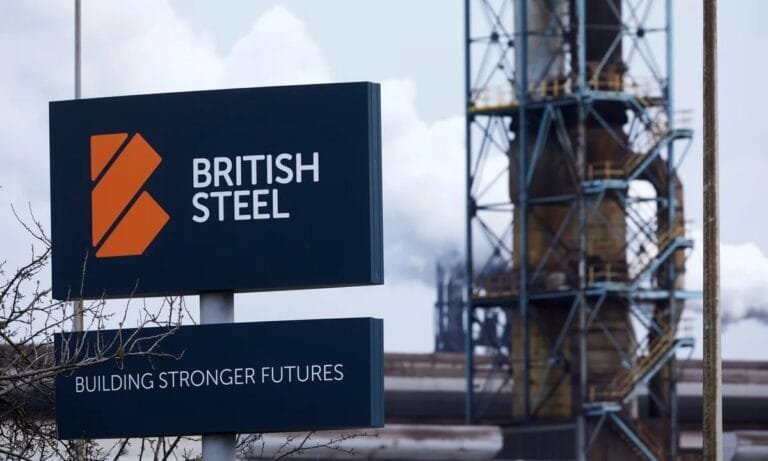
London, Britain – Diplomatic tensions between London and Beijing escalated on Friday following the British government’s decision to nationalize British Steel, formerly owned by China’s Jinji Group. This move was part of the government’s efforts to protect the UK’s last remaining primary steel producer and ensure its continued operation amidst economic challenges.
Angry Chinese reaction
Beijing expressed its strong dissatisfaction with the British move, calling it an “unacceptable action.” In a strongly worded statement, the Chinese Ministry of Commerce accused the British government of “disregarding” the Chinese group’s contributions to the domestic economy. Furthermore, it accused the British government of “forcibly seizing” the company’s assets. The Chinese Embassy in London also urged the British government to engage in effective dialogue with the company and to reach a mutually agreeable solution that safeguards the rights of Chinese investment.
British motives: protecting the “national interest”
In contrast, outgoing British Prime Minister Keir Starmer asserted that the decision was made “in the national interest” to safeguard the future of the country’s steel industry. The decision also aimed to protect thousands of direct and indirect jobs, particularly at the Scunthorpe steel plant in northern England, which employs approximately 2,700 workers.
Business Secretary Peter Kyle explained that the government was forced to take this action after failing to find a buyer for the company. He noted that the state had already spent around £640 million ($866.1 million) to keep it running, with daily operating costs exceeding £1 million. Kyle added, “It’s excellent value for money for the British people, but we must ensure the sustainability of this business going forward.”
Challenges in the steel sector
British Steel is the last major producer of primary steel in Britain and a strategic supplier to the rail, construction, and automotive industries. In recent years, the plant has faced significant pressure due to rising domestic energy costs. It has also been impacted by a global oversupply, prompting the government to impose tariffs and quotas to prevent the market from being flooded with cheap steel.
Despite Beijing’s opposition, the nationalization move was supported by UK Steel, which asserted that the decision was necessary to prevent the plant’s closure. At the same time, it emphasized the urgent need for a long-term plan to restore the company’s commercial viability. Notably, this marks the company’s return to public ownership for the first time since its privatization under Margaret Thatcher in 1988.