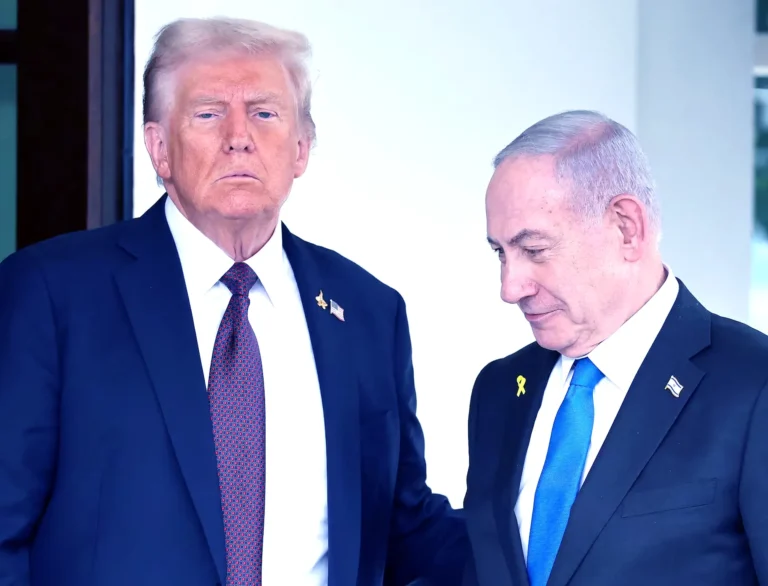
Washington, USA – In a significant development reflecting the complexities of US foreign policy toward Middle East crises, Axios reported firm statements from US President Donald Trump directed at Israeli Prime Minister Benjamin Netanyahu. Trump warned that any Israeli move toward returning to war with Iran might leave Tel Aviv facing the confrontation alone, without direct American support or involvement.
This stance, occurring amidst ongoing communications, underscores the US administration’s desire to avoid being dragged into a new regional conflict. Analysts view these warnings not merely as diplomatic messages, but as an expression of a strategic American vision that seeks to prioritize regional stability according to its own interests and avoid new military exhaustion.
Diplomatic Balance vs. Military Escalation
In a related context, Trump emphasized during his calls with Israeli officials the urgent need to prioritize diplomatic channels. Through this warning, the US administration is effectively drawing an unspoken red line against expanded military operations, fearing that any reckless step could trigger an open conflict threatening regional and international security.
Furthermore, the US President noted that regional stability depends heavily on restraint, stressing that other regional states have expressed extreme concern over escalation and support pushing toward a political settlement that restores calm to the Iranian-Israeli theater.
Implications for Strategic Relations
On another note, this divergence in assessments between Washington and Tel Aviv raises questions about the future of strategic alliances. While Netanyahu seeks to ensure Israel’s security from his perspective, US foreign policy at this stage appears more focused on “crisis containment” and preventing a slide into long-term wars.
In conclusion, these statements indicate a delicate phase of security coordination. As Tel Aviv attempts to deal with Iranian threats, it finds itself facing a new reality imposed by the US administration, which favors diplomatic solutions over direct military intervention, leaving the responsibility for de-escalation in the hands of regional parties to prevent a larger regional explosion.