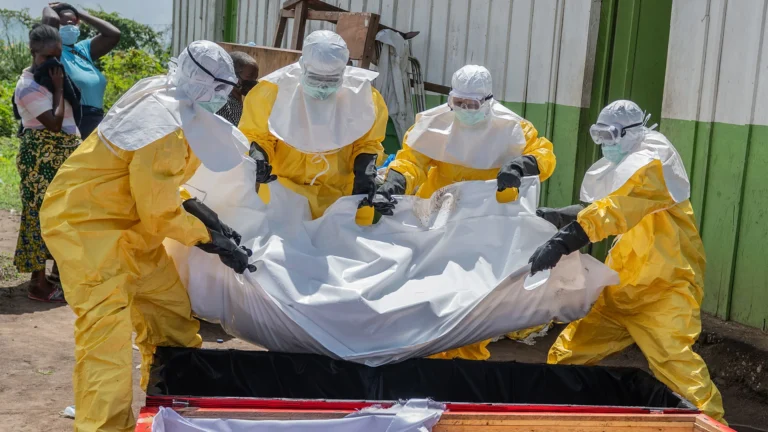
Kinshasa, DR Congo – Health authorities in the Democratic Republic of the Congo have announced a concerning update in their latest epidemiological report. Confirmed Ebola virus cases have risen to 550, resulting in 101 deaths so far. This rapid increase in infections reflects the ongoing spread of the disease across multiple geographic clusters. As a result, the health system is being put to the test against one of the world’s most dangerous viral epidemics.
On the other hand, health authorities confirmed that new cases were recorded recently in areas that are sometimes difficult to reach. Consequently, this has prompted authorities to strengthen epidemiological surveillance operations and expand contact tracing efforts. They are doing this in an attempt to control transmission chains before they become uncontrollable hotspots.
Emergency Response to Contain the Outbreak
In a related context, the Congolese government, in partnership with the World Health Organization (WHO) and international organizations, has intensified efforts to contain the Ebola virus. Current measures include:
Vaccination Campaigns: Expanding access to vaccines in high-risk areas.
Community Awareness: Intensifying programs to educate residents on disease prevention methods.
Infrastructure Enhancement: Improving the capacity of local health centers to handle detected cases and provide medical isolation.
Risks of Health and Logistical Repercussions
Furthermore, the continued rise in the number of deaths raises serious concerns about the widening scope of the crisis. Areas suffering from logistical challenges and weak infrastructure face greater difficulties in isolating patients and providing urgent care. Authorities emphasize that full control over the Ebola virus requires close integration between local efforts and international support to ensure the protection of the population and prevent the epidemic from reaching densely populated areas.
In conclusion, all eyes remain on field efforts, as authorities emphasize that time is the critical factor in this battle. Limiting the transmission of the Ebola virus is not just a medical responsibility, but a security and developmental challenge that requires sustainable financial and logistical support to save lives and encircle this epidemic at its source.