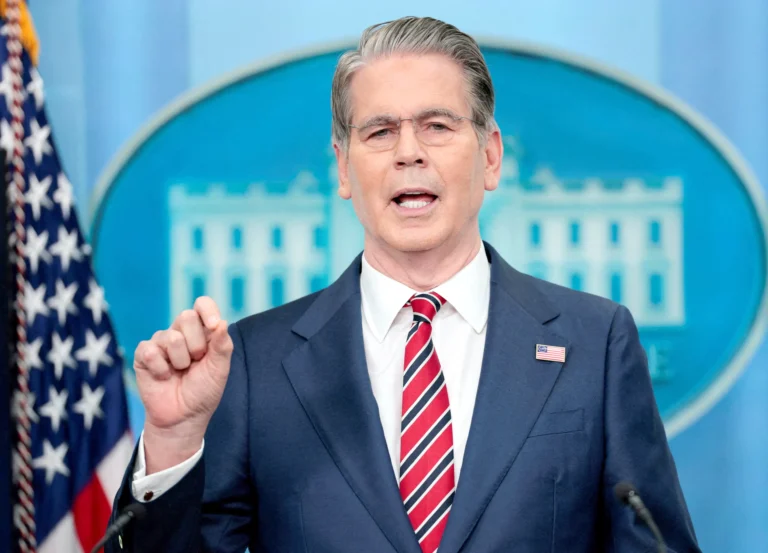
Washington, DC – The US Treasury Secretary stated that the economic sanctions imposed on Iran are a key component of the US pressure campaign.
He also emphasized that any shift in this policy is contingent upon Tehran’s behavior regarding regional and nuclear issues.
In this context, he stressed the necessity of clear and verifiable compliance guarantees.
Emphasis on the effectiveness of economic sanctions
The US Treasury Secretary explained that sanctions and economic embargoes are key tools in US policy toward Iran.
He indicated that Washington will not accept any settlement or agreement
that does not definitively guarantee Iran will not acquire a nuclear weapon.
Furthermore, the US will continue to monitor Iran’s compliance with relevant international standards.
He added that the economic pressure aims to compel Tehran to make tangible changes in its policies.
The Strait of Hormuz as an indicator of commitment
In a related context, the US Treasury Secretary stated that the resumption of navigation through the Strait of Hormuz
without additional fees or restrictions would be the first practical indication of
Iran’s commitment to de-escalation and cooperation on international issues.
He noted that this waterway represents a crucial test of the seriousness of any future commitments.
The stance on the nuclear program and Iranian statements
The US Treasury Secretary emphasized that his country would not accept any agreement
that did not guarantee Iran would be prevented from acquiring a nuclear weapon under any circumstances,
at a time of increasing diplomatic pressure. Meanwhile, media reports indicated potential Iranian preparations to abandon its nuclear program.
This would be the first such move in nearly 47 years, opening the door to
a possible reshaping of the negotiating landscape between the two sides in the coming period.