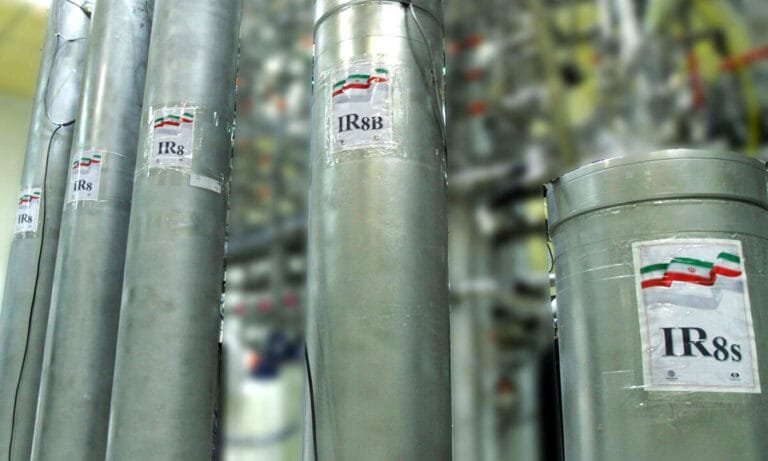
Tehran, Iran – The deputy secretary of Iran’s Supreme National Security Council confirmed that Iran’s stockpile of enriched uranium “is not on the negotiating agenda.”
This statement underscores Tehran’s continued adherence to its position regarding its nuclear program.
The Iranian official, in remarks carried by local media, said that his country considers the enriched uranium issue a matter of its sovereign rights.
He indicated that it will not be subject to negotiation in any future talks with international parties.
Hold on to nuclear rights
The Iranian official stressed that Tehran would not back down from what he called its “legitimate rights” in the nuclear field.
He also affirmed that Iran’s nuclear activities are conducted in accordance
with the country’s strategic and legal needs.
He added that Iran is continuing to develop its peaceful nuclear capabilities.
He explained that this is being done while adhering to what it considers
“independent national frameworks,” free from Western political pressure.
The Iranian statements come amid ongoing tensions between Tehran
and Western countries regarding the future of Iran’s nuclear program, particularly its stockpile of enriched uranium.
This is occurring against a backdrop of disagreements concerning enrichment levels, monitoring mechanisms, and economic sanctions.
complex negotiations
The United States and several European countries have repeatedly called for additional restrictions on Iran’s enrichment activities.
Tehran, for its part, maintains that its nuclear program is solely for peaceful purposes.
Observers believe that excluding the issue of Iran’s enriched uranium stockpile
from negotiations could further complicate any new diplomatic process.
This is especially true given the continued divergence between Iran
and the West regarding the conditions for returning to previous nuclear agreements.
Tehran insists that any future agreement must guarantee the lifting of
sanctions and respect for what it considers its full nuclear rights.
Furthermore, it emphasizes its rejection of any new restrictions that go beyond the existing agreements.