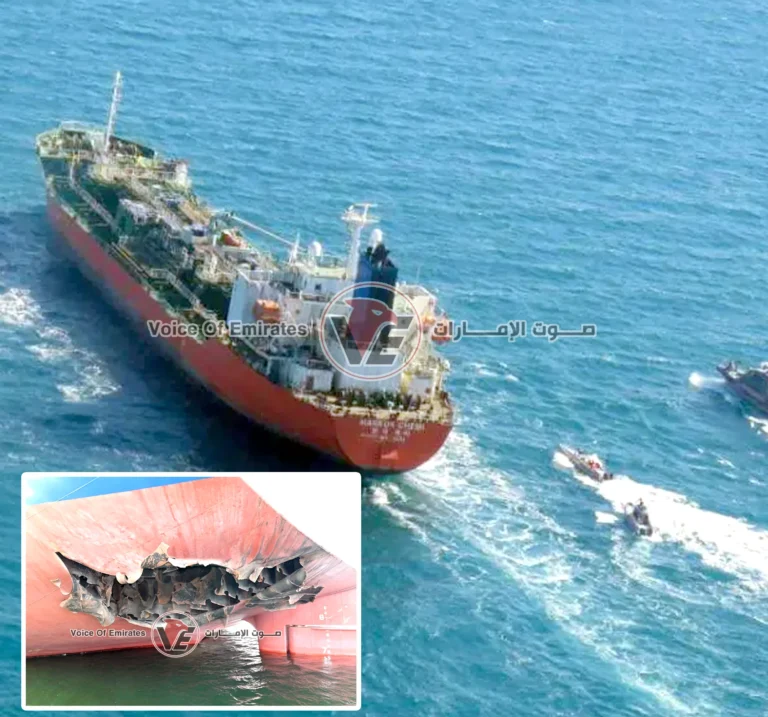
Seoul, South Korea – South Korea Foreign Ministry announced that the attack on a cargo ship operated by the South Korean company HMM in the Strait of Hormuz in early May was likely carried out using an Iranian anti-ship missile.
This conclusion was based on the findings of a government investigation into the incident.
This development comes amid escalating security tensions in the Gulf region.
Furthermore, concerns regarding maritime security in Iran and the surrounding area of the Strait of Hormuz have intensified.
Evidence points to Iranian equipment
South Korea Foreign Ministry said that investigations into the missile debris found inside
the ship showed indications that the components used were of Iranian origin.
Deputy Foreign Minister Park Yeon-joo explained that the engines resembled small jet engines produced in Iran.
Some of the parts also bore markings believed to be from an Iranian factory.
The investigation revealed that the ship, named “Namo,” was subjected to two separate attacks.
The first warhead did not detonate, while the second exploded, causing a fire and damaging the ship’s lower stern.
Seoul summons Iranian ambassador
South Korea officials indicated that the warheads were similar in type to those used in Iran’s Noor and Qader anti-ship missiles.
South Korea confirmed it would summon the Iranian ambassador in Seoul
to inform him of the investigation’s findings and lodge a formal protest.
It will also demand that Tehran take measures to prevent similar incidents in the future.
Iran had previously denied any responsibility for the attack.
A South Korean defense official stated that the firing of two missiles indicated,
from a military perspective, a clear intent to damage the vessel.