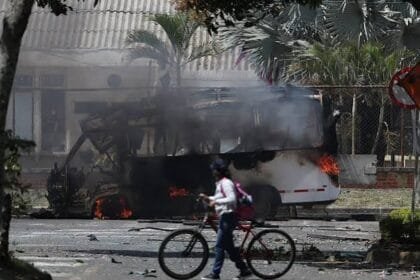
Islamabad, Pakistan – A powerful explosion rocked Quetta, the capital of Balochistan province in southwestern Pakistan, on Sunday morning. The blast targeted a train carrying members of the Pakistani military. The attack killed 24 people and injured more than 50 others, prompting a large-scale security alert.
“Al-Majid Brigade” claims responsibility for the operation
In a serious security development, the Balochistan Liberation Army (BLA) claimed full responsibility for the attack, describing it as a “organized commando operation.” In an official statement, the group’s commando unit, the Majid Battalion, confirmed that it targeted the train departing from Kant al-Qatta (a military region) in what it described as a large-scale attack.
The group also vowed in its statement to release further details about the operation and the extent of the material and human losses inflicted on the “enemy” at a later time.
Authorities’ response and external accusations
Pakistani authorities quickly cordoned off the area. Rescue teams and counter-terrorism units rushed to the scene to control the fires that broke out in the damaged train carriages and evacuate the injured.
Initial footage showed several carriages derailed. Damage to a number of civilian vehicles near the blast site was also evident.
On an official level, the Pakistani government strongly condemned the attack, asserting that it would not tolerate such terrorist activities. Reflecting the heightened tensions, Pakistani officials accused external actors. They also pointed to the involvement of hostile elements operating from neighboring countries to destabilize the nation.
The government affirmed that such terrorist operations will not weaken the state’s resolve in confronting extremism, vowing to pursue those responsible for the attack and impose deterrent punishments upon them.
This operation comes at a time when Balochistan province is witnessing a marked escalation in security tensions. This also raises questions about the security forces’ ability to secure military and civilian transport routes in areas where armed groups are highly active.
The investigation is ongoing, with explosives experts examining forensic evidence to determine the precise nature of the attack and the methods used to breach the security perimeter surrounding the military area.