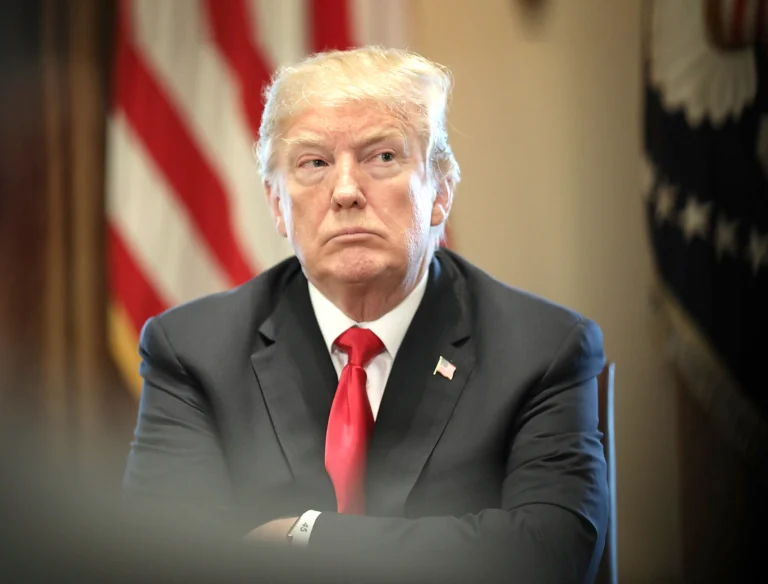
Washington – Voice of the UAE: In a sudden move reflecting the scale of internal divergence in Washington over the governance of emerging technologies, the White House postponed a ceremony that was scheduled for US President Donald Trump to sign a new, highly critical executive order concerning artificial intelligence and cybersecurity.
This postponement, revealed by an internal memo obtained by the “Axios” website, comes as a new setback for legislative efforts that have already stalled due to sharp disagreements behind the scenes.
President Trump commented on this decision to reporters at the White House, clearly justifying his stance: “I didn’t like some aspects and provisions contained in the draft, so I delayed the signing. We are currently ahead of China, and we are ahead of everyone in this field, and I do not want under any circumstances to do anything that might hinder this progress or pose an obstacle to American innovation, and I want to make absolutely sure that the new directive will not be like that.”
The event was supposed to witness a high-level attendance of several chief executive officers of tech, AI, and digital security firms in the United States, before the administration informed them of the ceremony’s postponement to an as-yet-undetermined later date.
Features of the Executive Order, Concerns Over “Mythos,” and Network Vulnerability Detection Capabilities
Bloomberg reported that the draft of the upcoming executive order focuses on two axes: the first aims to expand existing intelligence-sharing programs in the cybersecurity field to include AI companies, without imposing mandatory federal approval before launching advanced models. Instead of direct oversight, the directive calls for voluntary government testing of AI systems to detect vulnerabilities in federal and local networks and critical infrastructure.
These moves come a few weeks after Anthropic announced that its highly advanced new model, “Mythos,” possesses exceptional and unprecedented capabilities in detecting vulnerabilities in digital networks, raising severe security fears regarding its potential exploitation to breach vital systems.
Despite the restrictions imposed by the company limiting the model to Wall Street institutions and major tech corporations, Trump administration officials are pressing to provide federal agencies and departments with a version of “Mythos” to test their defenses; the National Security Agency (NSA) has already begun using it. Conversely, the White House rejected plans by Anthropic to expand the software’s distribution to dozens of additional companies to preempt any leaks.
Federal Coalition and Voluntary Programs with Giants, Coordinating with OpenAI and xAI
Politico magazine quoted five knowledgeable sources stating that the directive will task a coalition of national security and civilian agencies with tightening oversight over “covered frontier models.” The current dispute centers on whether the administration will impose a mandatory prior federal review—an option that Trump’s economic mindset steers away from—but the latest draft settled on requiring developers to submit their systems for a voluntary review 90 days before public release.
Washington is currently managing an evaluation program led by the Center for AI Standards and Innovation (CAISI), and major companies such as Google, Microsoft, and xAI, owned by billionaire Elon Musk, in addition to OpenAI, have agreed to grant the government access to their models. In this regard, Chris Lehane, Head of Global Affairs at OpenAI, confirmed that the company is coordinating with the White House to develop a deployment strategy for the “GPT-5.5-Cyber” model, designed specifically to bolster national cyber defenses.
Firm Timelines for the Pentagon and the Treasury to Secure Critical Infrastructure
The draft sets strict timelines; it grants the US Department of Defense “The Pentagon” a 30-day grace period to secure its networks and communication systems. The administration is granted a similar timeline to issue directives expanding the use of AI in rural hospitals, local banks, and public service facilities.
The Treasury Department is tasked with leading voluntary efforts to establish an information-sharing center within 30 days, to build a solid partnership that monitors and synthesizes security vulnerabilities before they are exploited by rival powers.