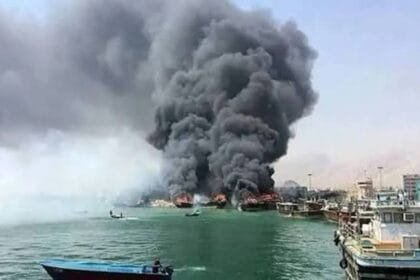
Vienna, Austria – The Director General of the International Atomic Energy Agency (IAEA), Rafael Grossi, revealed sensitive security assessments indicating that most of Iran’s stockpile of highly enriched uranium likely remains within the Isfahan nuclear complex. This facility was the target of intense airstrikes last year and has also been repeatedly attacked during the armed conflict that erupted this year.
Mystery in Isfahan and satellite images
In an exclusive interview with The Associated Press on Thursday, Grossi explained that the agency possesses satellite imagery showing the aftermath of the recent attacks. He confirmed that intelligence continues to flow.
He noted that on-site inspections in Isfahan have been forcibly halted since June 2025. This coincided with the war launched by Israel and the United States targeting three Iranian nuclear sites.
Grossi stated frankly, “We were unable to inspect or verify the integrity of the agency’s seals… What I am offering is the best assessment we have based on pre-war data.” He cited satellite images from Airbus showing a truck carrying 18 blue containers entering a tunnel at the Isfahan nuclear technology center shortly before the war. These containers are believed to contain enriched uranium and remain there.
The arms race: 10 potential nuclear bombs
According to technical data, Iran currently possesses 440.9 kilograms of uranium enriched to 60%, a threshold very close to the 90% enrichment level required for weapons production.
Grossi warned that this quantity is substantial enough to enable Tehran to produce up to 10 nuclear bombs should it make the political decision to militarize its nuclear program.
He emphasized that the agency is working diligently to expand its inspections to include the Natanz and Fordow facilities. The goal is to ensure that nuclear materials are not diverted.
The “deportation” option and the American position
Regarding the proposed solutions, Grossi revealed discussions with Russia and other major powers to transfer highly enriched uranium out of Iran. He described the process as politically and logistically complex.
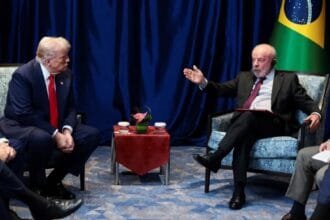
For his part, US President Donald Trump indicated that his Russian counterpart, Vladimir Putin, had renewed his offer to assist in this matter. He emphasized that the ultimate goal is “to get this material out of Iran or to dilute it to reduce the enrichment levels.”
“Different” negotiations and American skepticism
Grossi believes the current negotiations differ radically from the 2015 agreement due to Iran’s significant technological advancements in using sophisticated centrifuges. While there is a “glimmer of hope” for the negotiations, the gap in agreement regarding the “first steps” remains wide.
For his part, US Secretary of State Marco Rubio warned of Iran’s “skill” in negotiating to buy time. He stressed that any future agreement must decisively and definitively prevent Tehran from acquiring the capability to produce a nuclear weapon. This comes especially in light of Washington’s recent rejection of Iranian proposals regarding lifting sanctions and reopening the Strait of Hormuz before the nuclear issue is resolved.