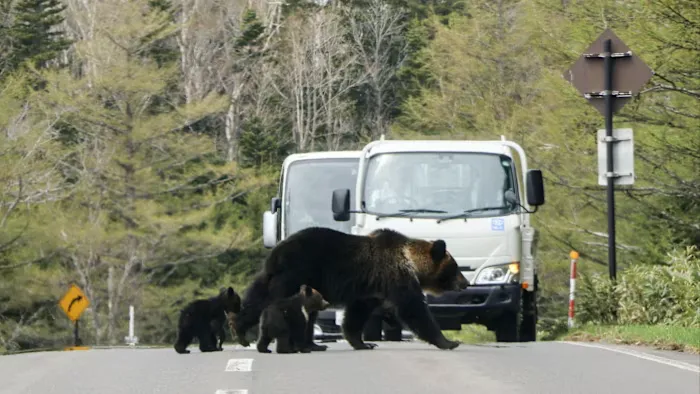
Tokyo, Japan – Japan is experiencing growing concern following an unprecedented wave of bear attacks. The attacks have spread beyond forests to the outskirts of cities and residential areas, posing a threat to public safety and raising questions about the reasons behind this sudden surge in aggression.
According to official reports, approximately 238 attacks have been recorded recently, resulting in 13 deaths and dozens of injuries. These incidents have prompted authorities to raise the alert level and issue warnings against approaching mountainous or forested areas, especially given the increasing number of bear sightings in the vicinity of villages and suburbs.
Environmental experts believe that climate change, the depletion of natural food sources within forests, and urban expansion have driven bears to seek alternative food sources. This has led to direct and dangerous contact with humans. Furthermore, some areas have witnessed a decline in the number of hunters. Consequently, this decline has contributed to an uncontrolled increase in the bear population.
The Japanese government has begun taking urgent measures, including intensifying patrols, distributing public awareness guidelines, and, in some cases, allowing direct contact with bears that pose an imminent threat. This is an attempt to contain the crisis before it worsens.
These incidents remain a worrying indicator of the imbalance between humans and nature. The confrontation is no longer confined to the depths of the forests but has extended into the heart of daily life. This reflects a growing environmental and security challenge.