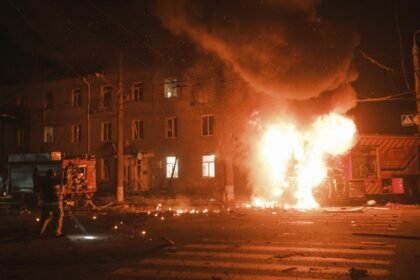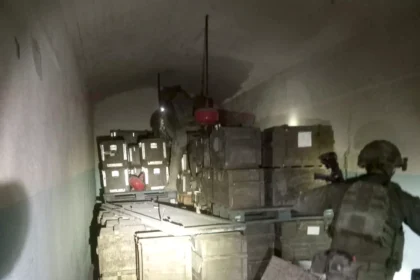
Tehran, Iran – Statements by Iranian leaders today, Thursday, April 30, 2026, paint a complex picture, combining political deadlock in the nuclear negotiations with a readiness on the ground for a full-scale military confrontation.
The Iranian parliament announced its categorical rejection of any compromise on enrichment. In a related development, the Revolutionary Guard outlined a list of potential targets in the event of a clash with Washington and Tel Aviv.
Mutaki: There will be no negotiation on the right to enrichment.
Iranian lawmaker and former foreign minister Manouchehr Mottaki asserted that Iran will not accept the “no enrichment” precondition for negotiations.
In remarks to the Iranian Students’ News Agency (ISNA), Mottaki stated, “Had we known earlier that Washington was seeking to completely eliminate uranium enrichment, we would have fundamentally changed our strategy.”
Mottaki pointed out that US President Donald Trump had begun promoting the idea of ”zero enrichment.” The Iranian MP considered this non-negotiable, saying, “If this is their final position, then there is no point in negotiating, because the issue of enrichment is a sovereign right that America has no right to interfere with.”
Rezaei: The map of objectives and the final scenario
Amid the diplomatic impasse, General Mohsen Rezaei, military advisor to Supreme Leader Mojtaba Khamenei, offered a strategic analysis of the likely shape of the next battle.
In a televised interview, Rezaei predicted that potential strikes would focus on the southern coast and vital areas near Isfahan. He also anticipated attacks on parts of western Iran, with the possibility of assassinations or airstrikes in the heart of the capital, Tehran.
Rezaei described the current military plans as a “last resort” after the failure of previous options, emphasizing that the decision for war and peace rests entirely with the Supreme Leader.
He added firmly, “The quest for revenge for the assassinations of the leaders, including former Supreme Leader Ali Khamenei, remains, and this matter will not be resolved until Israel is eliminated.”
Warnings of a “tragedy” for Washington
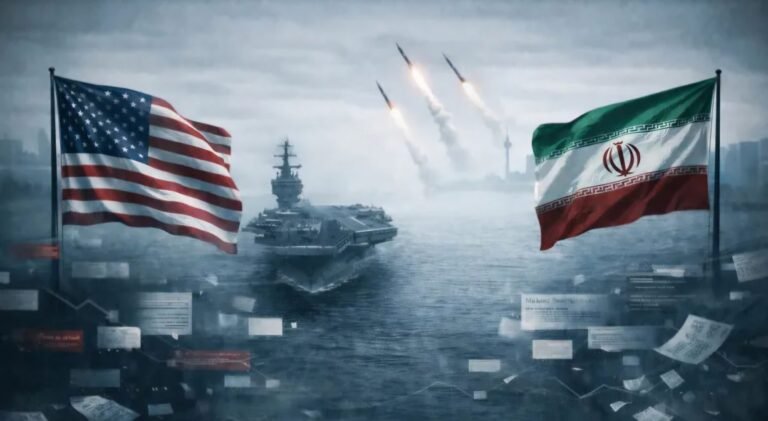
Rezaei warned the US administration against engaging in a direct confrontation, arguing that any war would be a “catastrophe” for Washington, resulting in the sinking of warships and the capture of American soldiers.
Rezaei claimed that Trump is experiencing “political gridlock.” He added that Trump might try to shift the responsibility to Congress to avoid the consequences of defeat.
These statements reflect the extent of the tension on the ground. In this context, Washington is brandishing the “Freedom of War Maritime Coalition” to secure the Strait of Hormuz. Meanwhile, Tehran is threatening a full-scale military option, placing the region on the brink of a potential explosion.