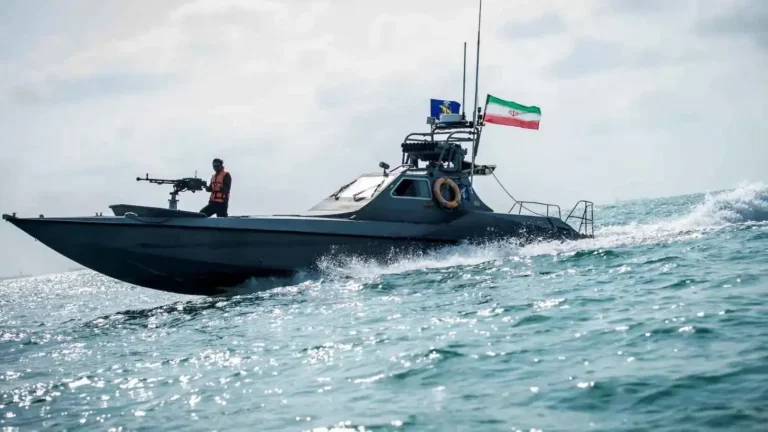
Tehran, Iran – In a new escalation in the Strait of Hormuz and regional waterways, the Iranian Revolutionary Guard Corps Navy announced the seizure of the vessel Epamineondas, on suspicion of collaborating with the US military and committing a series of legal and navigational violations. The Tasnim News Agency quoted an official statement from the Revolutionary Guard Corps saying that the seizure followed a thorough investigation and intensive intelligence monitoring by the naval forces. The statement also indicated that the Epamineondas had made numerous voyages to US ports over the past six months, raising suspicions about the nature of its missions and its connection to the US military. Tehran classifies the US military as a “terrorist army.” The Revolutionary Guard Corps added that the vessel was seized after repeatedly ignoring warnings issued by them. Furthermore, it was implicated in maritime violations that harm the security of the region.
The Epaminodes was not the only vessel seized by the Revolutionary Guard; reports last Wednesday confirmed the detention of another ship, the MSC Francesca. The statement explained that both vessels were taken to Iranian waters for legal proceedings. Regarding the reasons for this strict measure, the Revolutionary Guard attributed the seizures to the ships sailing and engaging in maritime activity without the necessary permits. The statement also alleged that the vessels deliberately concealed navigational data or manipulated radar, actions which it described as “endangering international maritime safety.”
This move comes at a sensitive time, amid escalating political and military tensions in the region. Observers believe these actions reflect the Revolutionary Guard’s desire to impose “complete control” over maritime traffic in the Strait of Hormuz, while simultaneously sending direct pressure messages to the United States and its allies. These recurring incidents underscore the ongoing confrontation between Tehran and Washington at sea, further complicating the security landscape in this crucial global energy trade route. International navigation faces increasing legal and security challenges due to the lack of political consensus among regional powers.