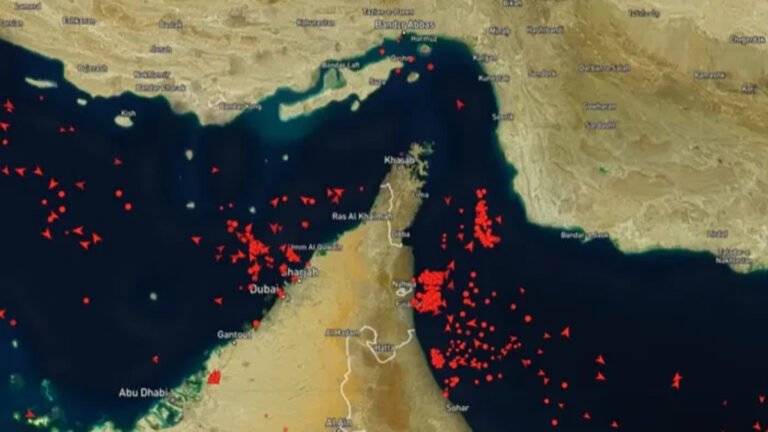
Tehran, Iran – In a stark indication of the paralysis gripping global trade and energy, Reuters, citing shipping tracking data, reported that only five vessels managed to transit the Strait of Hormuz in the past 24 hours.
This sharp and unprecedented drop in shipping traffic is a consequence of the ongoing military escalation. It also stems from the strait’s closure to international tanker traffic.
Iranian tanker defies blockade
Analysis of data from Kpler and MarineTraffic revealed that among the few vessels that attempted the transit was the Iranian oil tanker Niki, which flies the Iranian flag and is subject to US sanctions.
According to tracking data, the Niki sailed out of the strait without specifying a final destination. This raises questions about its fate should it continue sailing eastward toward the “blockade line” imposed by the US Navy in the Arabian Sea.
Cautious movements in Gibraltar and Basra
In a related development, the German shipping group Hapag-Lloyd announced that one of its ships had successfully crossed the Strait of Gibraltar, but remained silent regarding the timing or circumstances of the crossing, in a clear indication of the security blackout imposed by shipping companies to protect their fleets.
In southern Iraq, the Comoros-flagged supertanker Helga arrived at a loading terminal in the port of Basra.
The Helga is the second vessel to reach Iraqi ports since the closure of the Strait of Hormuz. This reflects the significant difficulties faced by Gulf states in exporting their crude oil to global markets.
Economic and security repercussions
Observers believe that the current decline in traffic through the Strait of Hormuz represents a “strangulation” of a vital global energy artery, as the strait used to see dozens of tankers passing through daily, carrying approximately 20% of the world’s oil consumption.
With the arrival of negotiating delegations in Islamabad tonight, the issue of freedom of navigation in the Strait of Hormuz remains the most complex point of discussion. This comes amid fears of a global energy price surge if this maritime impasse continues.