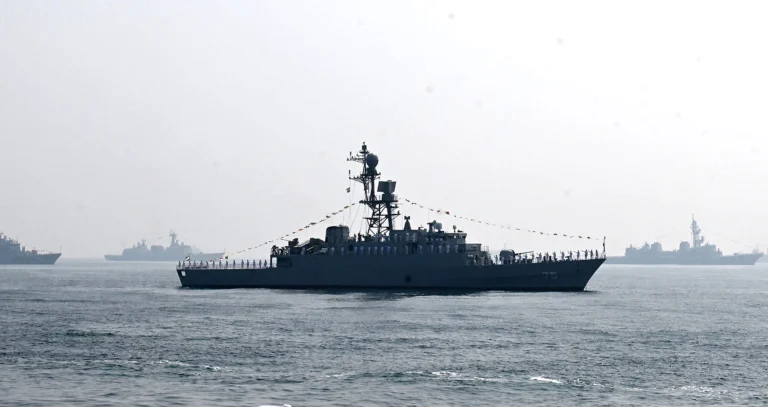
International Waters – Agencies – Media reports stated that a US Navy destroyer suddenly intercepted the path of an Iranian-flagged merchant ship in a vital area of international waters. This move forced the ship to completely change its destination amidst an atmosphere of escalating tension in strategic sea lanes. Furthermore, security experts are monitoring the repercussions of this direct friction on global trade movement. Accordingly, the maritime tension between Washington and Tehran represents a new challenge to the stability of supply chains in the Indian Ocean. In this regard, naval surveillance is intensifying in sensitive areas to avoid any uncalculated military clash.
Forced Escort and Warning Messages Compel the Ship to Change Direction
The incident occurred during a routine naval patrol in a range that witnesses frequent friction between international forces and merchant ships. Obviously, the US Navy dealt with the Iranian ship by issuing firm warning messages and a direct forced escort. As a result, the ship’s crew was forced to deviate from the original course and head away from the target area. In addition, the maritime tension between Washington and Tehran contributes to increasing marine insurance costs and delaying the arrival of commercial shipments. However, there were no reports of armed confrontations or injuries during the interception process that took place in open waters.
State of Anxiety in Sea Lanes and Global Energy Supply Lines
This incident comes amidst a state of increasing anxiety within a number of vital sea lanes linked to global trade lines. Certainly, energy supplies remain at the heart of this conflict, as incidents of naval interception and surveillance between major powers recur periodically. Accordingly, analysts believe that the maritime tension between Washington and Tehran could lead to a partial disruption in the movement of oil and gas tankers. On the other hand, this escalation reflects the desire of international parties to impose their control over strategic navigational routes. In the same context, international maritime organizations seek to defuse the crisis and ensure freedom of navigation in international waters.
Official Silence Regarding the Nature of the Cargo and the Ship’s Final Destination
So far, no detailed official statements have been issued by the US or Iranian sides regarding the nature of the ship’s cargo or its final destination. Obviously, the parties involved maintain silence or settle for brief and cautious statements to avoid direct political escalation. As a result, this secrecy opens the door to speculation about the ship’s role in transporting sensitive cargo or violating certain naval protocols. In addition, the maritime tension between Washington and Tehran reinforces the intensive military presence in the Indian Ocean and the Arabian Sea. Ultimately, the security of waterways will remain dependent on the ability of the active powers to exercise restraint and prevent confrontations from sliding toward the edge.