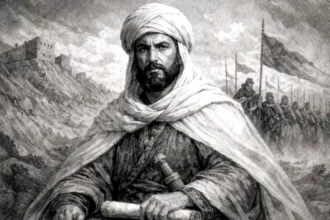
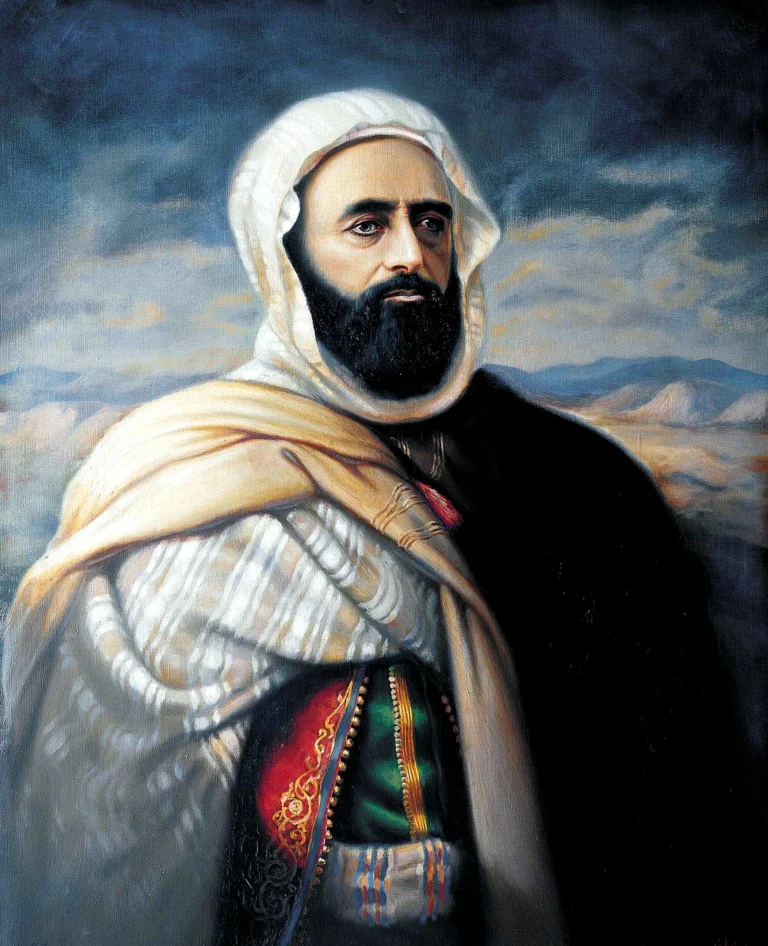
Algeria – The anniversary of the birth of Emir Abdelkader al-Jazairi, one of the most prominent figures in modern Algerian history, is being commemorated.
His name has evolved from that of a resistance leader against the French occupation to a historical figure associated
with building state institutions and establishing the principles of administration and organization.
Emir Abdelkader was born in 1808 in the El Guetna region of Mascara Province.
He grew up in a religious and scholarly environment that prepared him for leadership.
Prior to this, he took on the responsibility of confronting the French forces that began their occupation of Algeria in 1830.
He organized the tribes and established a well-organized army
During the years of resistance, Emir Abdelkader succeeded in organizing the tribes and establishing a well-structured army.
He also set up administrative, judicial, and financial institutions, striving to build
a political entity capable of confronting the occupation and preserving the unity of Algerian territory.
His efforts were not limited to the military sphere; he also focused on administering
the regions under his influence and organizing the affairs of the population.
For this reason, historians consider him one of the pioneers of the modern Algerian state.
Biography of Prince Abdelkader
After years of resistance, Emir Abdelkader was forced to surrender in 1847.
He later moved to the Levant, settling in Damascus.
There, his role in protecting Christians during the events of 1860 became prominent,
earning him widespread respect beyond the Arab world.
The legacy of Emir Abdelkader remains alive in Algerian and Arab memory.
He was a leader who combined resistance with political action and administrative organization.
Furthermore, he left a legacy that transcended battlefields, becoming a symbol of independence, dignity, and nation-building.