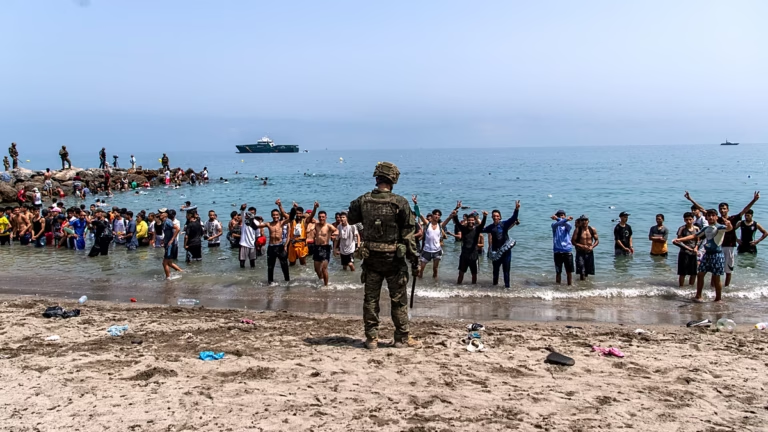
Lisbon, Portugal – Portuguese Foreign Minister Paulo Rangel stated that the substantial surge of migrants into Ceuta, the Spanish enclave in North Africa, over the summer did not pose an immediate threat to the European Union’s passport-free travel area, affirming his country’s assessment saw no direct risk to the Schengen zone.
Portugal Monitors Ceuta Developments
Speaking in an interview on the sidelines of the Ambrosetti Forum in Cernobbio near Milan, Rangel explained that Portugal kept the situation under continuous observation, receiving intelligence updates and sharing pertinent information with relevant partners. He noted that as neighboring countries, Portugal and France would have felt immediate spillover effects had a direct threat to the Schengen zone materialized, confirming this did not occur during the migrant influx.
Tens of Thousands Arrive From Morocco
Tens of thousands of migrants crossed into Ceuta from Morocco on July 31, sparking a crisis that prompted Italian Prime Minister Giorgia Meloni to institute border checks on arrivals from Spain. Spain responded with reciprocal inspection measures for travelers arriving from Italy, despite both nations belonging to the Schengen area, which normally guarantees borderless internal travel.
Spanish-Italian Rift Over Migration
Rangel described Spain and Italy as “friends,” expressing confidence that bilateral tensions could be resolved swiftly despite public disagreements between Meloni and Spanish Prime Minister Pedro Sánchez regarding migration and related dossiers. While the Italian government cited security concerns to justify border controls, critics condemned the move as politically motivated. Rangel noted Portugal supported Meloni’s call for an emergency meeting of EU interior ministers to address the Ceuta developments, while praising Morocco’s containment efforts against irregular migration as “truly impressive.”