
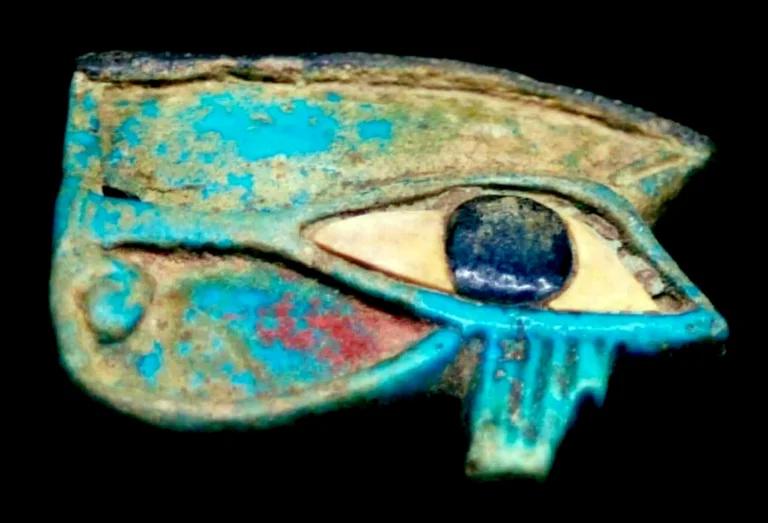
Cairo, Egypt – Sometimes a short symbol appears on prescriptions that seems mysterious to non-specialists and has been associated in popular memory with various interpretations.
Among them is the belief that it resembles the ancient Egyptian “Eye of Horus.”
But the historical and medical truth behind this symbol is more complex.
The symbol commonly found on modern prescriptions is usually the Latin letters Rx.
These are a traditional abbreviation for the word “prescription,” which in Latin means “take” or “consume.”
It was also used at the beginning of instructions given by a doctor to a pharmacist regarding the medication to be prepared.
The symbol is part of the traditional prescription form
Over time, the symbol became part of the traditional prescription form,
appearing at the beginning before the drug name, dosage, and instructions for use.
It evolved into a symbol that clearly indicated the following text as a medical instruction or prescription.
However, the visual similarity between the Rx symbol and certain
ancient Egyptian symbols led to the emergence of narratives linking it to the Eye of Horus.
This is one of the most famous symbols in ancient Egyptian civilization, associated with protection, healing, and safety.
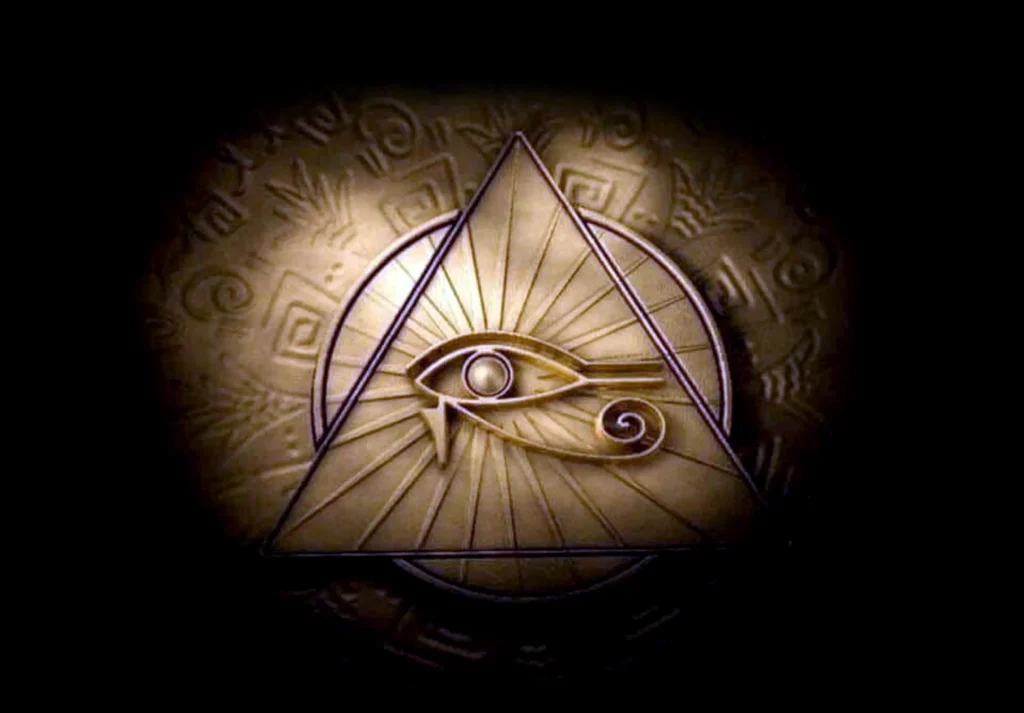
The Eye of Horus has an important religious and symbolic significance
The Eye of Horus, known in ancient Egyptian civilization as “Wadjet,”
held significant religious and symbolic importance, appearing in inscriptions, amulets, and artifacts.
It was associated with concepts of protection, health, and the restoration of strength.
Despite the striking similarities, there is no reliable historical evidence to prove
that the medical symbol Rx is directly derived from the Eye of Horus.
Therefore, the connection between the two is more of a popular interpretation than a confirmed historical fact.
A shorter prescription
The most widely accepted account suggests that the origin of Rx lies in
the Latin tradition associated with the word “prescription,”
which has been used in prescriptions by physicians and pharmacists for centuries.
The symbol gradually settled into its current form.
In the past, physicians did not write prescriptions in the way we know them today.
Prescriptions included detailed instructions for the pharmacist regarding the required materials,
how to prepare them, and the necessary quantities.
As pharmacy developed and medicines became pre-prepared, prescriptions became more concise.
However, some older symbols retained their place, including Rx.
The resemblance to the Eye of Horus
The reason this symbol has persisted into modern times is due to its near-universal use on prescriptions. It remains recognized even across different languages and healthcare systems.
Thus, this seemingly simple symbol at the top of a doctor’s prescription has a long history intertwined with medicine, pharmacy, and the Latin language.
Its resemblance to the Eye of Horus remains one of the most intriguing aspects of its origin.
Ultimately, Rx might initially appear to be an ancient Egyptian eye or symbol.
However, its most common historical interpretation traces its origin to a Latin word that,
for centuries, has been associated with a doctor’s instruction to a pharmacist: “Take” or “Consume.”