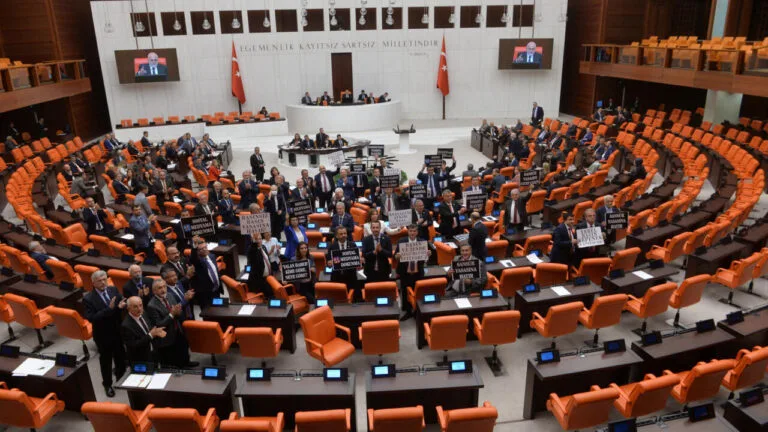
Ankara – The Turkish parliament passed a landmark bill aimed at advancing the peace process with the Kurdistan Workers’ Party (PKK), marking a significant political and legislative pivot in a conflict spanning four decades. Consequently, this measure underscores Ankara’s strategy to establish a binding framework for reintegrating former combatants and institutionalizing political pathways for long-term stability.
Furthermore, the newly enacted law equips state bodies with legal mechanisms to process sentence suspensions and manage judicial relief for eligible individuals. As a result, the legislation seeks to transition the long-standing issue from a purely military-security context toward a structured political negotiation aimed at disarming the group and resolving lingering grievances.
Political Dynamics and Implementation Challenges
On the other hand, the law’s passage reflects broader efforts to reshape state policy regarding the Kurdish issue while building mutual trust among political stakeholders. Specifically, the government intends to utilize these legal guarantees to stabilize border regions and address complex humanitarian and civil matters resulting from decades of confrontation.
Additionally, execution protocols aim to ensure social cohesion and prevent any regression into armed violence. Consequently, the practical impact of the law will depend heavily on subsequent administrative decrees and the sustained commitment of involved parties to execute agreed-upon measures.
Finally, parliament’s approval of the bill represents a critical milestone in Turkey’s modern political trajectory. Ultimately, ongoing implementation steps and compliance across political factions will determine the permanence of peace and stability in the country.