
Paris, France – On August 10, 1792, France witnessed one of the most decisive moments in the history of its revolution when revolutionaries stormed the Tuileries Palace in Paris—the residence of King Louis XVI. The confrontation ended with the collapse of the royal throne’s prestige and the King and his family becoming prisoners of the revolution.
Economic crisis and public anger
The attack took place three years after the outbreak of the French Revolution in 1789, amidst a crippling economic crisis, food shortages, and mounting public anger over the privileges enjoyed by the nobility and the ruling class.
Louis XVI had accepted a constitutional monarchy in 1791 after the Revolution imposed sweeping restrictions on his powers; however, the relationship between the King and the revolutionaries remained tense—particularly after the royal family attempted to flee Paris, was captured in the town of Varennes, and was brought back to the capital.
The war with Austria increases tension.
The war with Austria, which broke out in April 1792, heightened tensions, as revolutionaries began to view the King and Queen Marie Antoinette as a threat to the revolution, amidst fears that the palace was collaborating with European powers to restore the old monarchy.
Thousands of revolutionaries are heading to the Tuileries Palace.
On the morning of August 10, thousands of revolutionaries and National Guardsmen advanced toward the Tuileries Palace, while forces loyal to the King attempted to defend it.
As the clashes escalated, Louis XVI found himself unable to control the situation; he left the palace with his family and headed to the Legislative Assembly, while a fierce battle erupted inside the Tuileries, ending with the revolutionaries seizing control of the palace.
The fall of the Tuileries marked a historic turning point, as the King was no longer able to exercise his powers; his suspension and the detention of the royal family were soon announced.
Weeks later, the monarchy was officially abolished in France and the Republic was proclaimed, thereby ending centuries of monarchical rule and ushering in a new era marked by political conflict and revolutionary violence.
The End of Louis XVI and Marie Antoinette
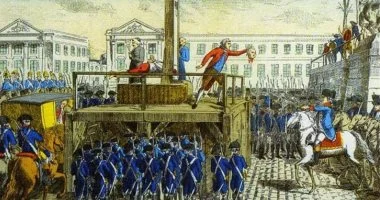
In January 1793, Louis XVI stood trial before the revolutionaries; he was convicted of treason and sentenced to death, meeting his end at the guillotine in Paris—a fate Marie Antoinette would also meet in October of the same year.
In January 1793, Louis XVI stood trial before the revolutionaries; he was convicted of treason and sentenced to death, meeting his end at the guillotine in Paris—a fate Marie Antoinette would also meet in October of the same year.
Since that day, August 10th has been associated in French history with the effective end of the monarchy and the beginning of the path toward the Republic—marking one of the most dramatic political transformations in Europe.