Paris, France – The Louvre Museum stands in the heart of the French capital, Paris, not merely as a colossal building housing thousands of works of art, but as a testament to centuries of French and world history.
Today, millions of visitors flock to see the Mona Lisa and masterpieces from ancient civilizations.
Its origins lie centuries ago as a defensive fortress.
It gradually transformed into a royal palace before becoming a museum open to the public.
The Louvre’s roots trace back to the end of the 12th century,
when a fortress was built during the reign of King Philip II to protect Paris.
Its location then differed significantly from its present position.
It was situated near the Seine River and was part of a defensive system designed to protect the city.
The Louvre has become a center for arts and culture
As Paris expanded and the nature of military threats changed,
the fortress gradually lost its defensive importance, and its features began to transform,
especially as French monarchs began using the site for purposes more closely linked to royal residence and the arts.
During the 16th and 17th centuries, the Louvre underwent significant transformations.
It became one of the most important royal palaces in France.
Its buildings and wings expanded, and it served as a royal residence.
Meanwhile, works of art began to accumulate within its walls in increasing numbers.
King Francis I was one of the most prominent figures who contributed to shifting the French court’s focus on art.
His reign was also marked by the acquisition of important works of art, including the Mona Lisa,
which later became the most famous piece in the Louvre and the world.
Over time, the Louvre was no longer merely a palace for the royal family; it became a center for the arts and culture.
This was particularly true with the growing collections of paintings, sculptures,
and antiquities that came into the possession of the French court.
Art and heritage belong to the people, not to any private privilege
The French Revolution radically altered the Louvre’s function. In 1793, it opened as a public museum.
Its stated aim was to make works of art accessible to the public,
rather than keeping them the exclusive domain of palaces and the royal elite.
This transformation was part of a broader revolutionary ideal:
that art and heritage belonged to the people, not to kings and princes.
Throughout the 19th century, the museum’s collections expanded significantly,
both through acquisitions and archaeological missions,
as well as works that arrived in France under various political and military circumstances.
This gradually transformed the Louvre into a global institution, bringing together diverse civilizations and historical periods.
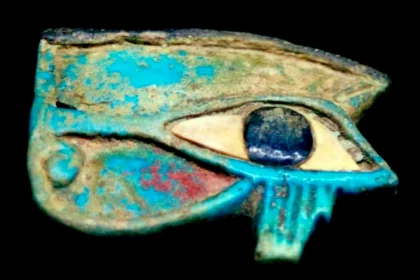
Today, the museum houses works spanning from ancient Egyptian, Greek, and Roman civilizations to medieval
and modern European art. It also contains art and artifacts from various regions around the world.
Leonardo da Vinci’s Mona Lisa remains the Louvre’s most famous icon.
However, the museum’s renown is not based on a single painting.
It boasts a vast collection of works that reflect the history of art and human civilization across millennia.
Louvre importance lies not in the number of its paintings
The Louvre evolution didn’t stop with the palace’s transformation into a museum.
The building has undergone successive expansions and renovations.
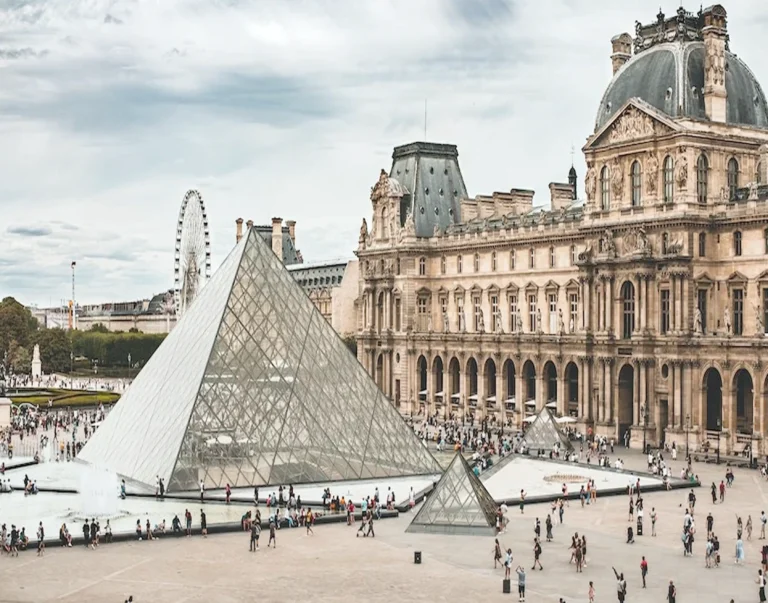
A prime example is the creation of the glass pyramid in its courtyard during the 20th century,
which has since become one of Paris’s most iconic landmarks.
Thus, the halls once associated with royalty and palaces have been transformed into open spaces
for visitors from around the world. The Louvre exemplifies how historical
buildings can adapt their functions as societies evolve.
From a fortress protecting Paris to a palace inhabited by royalty,
and then to a museum welcoming millions of visitors, the Louvre’s story is a long and arduous journey.
It has evolved from a symbol of royal power into a cultural repository open to all.
Therefore, the Louvre significance lies not only in the number of paintings
and artifacts it houses, but also in its story itself.
Its walls encapsulate centuries of wars, monarchs, revolutions, and art.
It tells the story of how a single place can transform
from a fortress closed to the public into one of the world’s greatest windows onto human history.