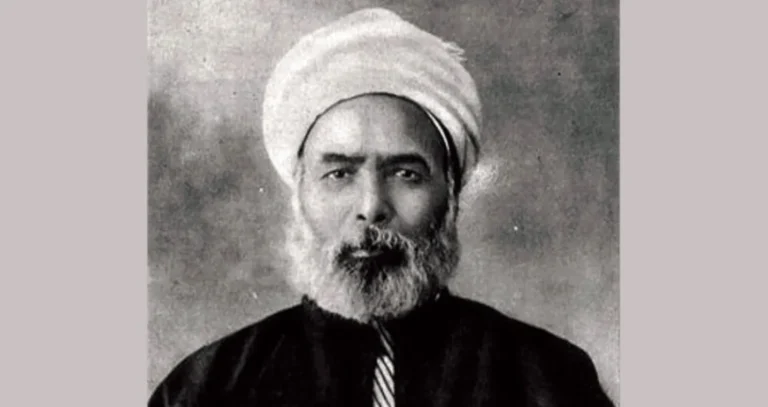
Imam Muhammad Abduh stands as one of the pillars of modern Islamic thought and a central figure in the history of the Arab Renaissance. He was not merely a traditional scholar of religion; he was the architect of a comprehensive intellectual project aimed at liberating the Islamic mind, renewing religious discourse, and laying the foundations for educational and judicial reform. His name remains synonymous with moderation and Ijtihad in Arab thought.
Intellectual Formation
Born in 1849 in the Beheira Governorate of Egypt, Abduh’s education at Al-Azhar honed his academic abilities. However, his meeting with the thinker Jamal al-Din al-Afghani was a turning point in his life. From him, Abduh adopted the spirit of renewal, balancing adherence to religious tenets with an informed openness to modern sciences, enabling him to craft an intellectual vision that bridges tradition and modernity.
The Pillars of His Reform Project
Abduh’s methodology was built on strong intellectual foundations, starting with his call for the use of reason and the rejection of blind imitation and intellectual rigidity. He asserted that Islam is a religion of reason and logic, with no conflict between its texts and scientific truths. This call was accompanied by his insistence on re-opening the gate of Ijtihad to address contemporary issues, believing that Islam is compatible with every time and place if understood correctly, far removed from the innovations and superstitions that had attached themselves to it over centuries.
Institutional Efforts: Education and Justice
Abduh did not limit himself to theory; he sought to transform reality through leadership positions. Regarding education, he demanded the modernization of Al-Azhar’s curricula and the integration of modern sciences, asserting that education is the only path to the renaissance of nations and for building generations capable of carrying the banner of civilization without sacrificing their identity. In the judicial field, as the Grand Mufti of Egypt starting in 1899, he provided a model of enlightened jurisprudence that considered the context of time and place, issuing fatwas characterized by wisdom and moderation to modernize the justice system.
Scholarly Legacy
Abduh left an intellectual legacy that is still studied today, most notably “Risalat al-Tawhid” (The Theology of Unity), one of the most important books establishing the foundations of modern Islamic theology. He also produced “Tafsir al-Manar” (The Manar Commentary) in collaboration with his student Rashid Rida, which connects the Quran to contemporary life issues, alongside numerous articles and letters that ranged from defending Islam to dissecting the causes of societal backwardness and advocating for education.
and Enduring Legacy
Despite his death in 1905, his influence remains vibrant in the Arab consciousness. His ideas paved the way for generations of reformers and remain a fundamental reference in intellectual debates regarding the balance between tradition and modernity, and how to build societies based on knowledge, justice, and moderation, making him an icon of the Renaissance that remains present in the memory of Arab culture.