The Oud is one of the most ancient string instruments in the world and an unparalleled symbol of Arab musical heritage. It has been associated with ancient civilizations in the East and has traveled through centuries to profoundly influence the development of global music, maintaining its firm position as one of the most prominent instruments that truly expresses the cultural identity of Arab peoples, transcending the limits of time and place to become a universal artistic language.
Deep Historical Roots
The beginnings of the Oud date back thousands of years, as specialized archaeological studies indicate that primitive forms of it were known to the civilizations of Mesopotamia and Ancient Egypt. Since then, this instrument evolved throughout the Islamic eras to become the backbone of Arab musical ensembles. The journey of the Oud did not stop at the borders of the East, but rather set off toward the European continent during the Middle Ages, where it had a tangible impact on the emergence and development of a number of Western string instruments, making it a witness to a continuous cultural dialogue between civilizations.
Unique Composition and Warm Sound
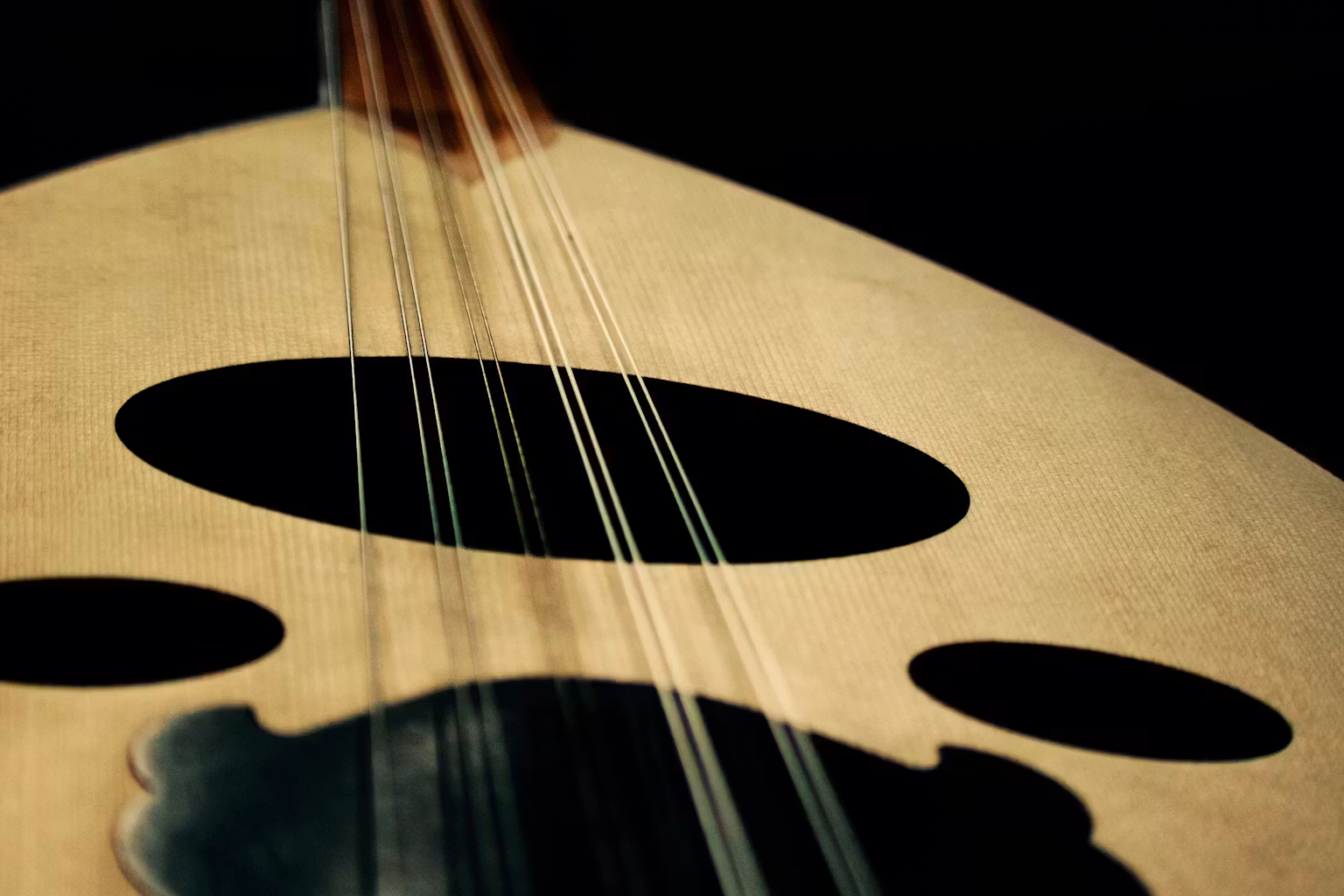
The uniqueness of the Oud is manifested in its geometric design, represented by its pear-shaped wooden body and short neck, a design that granted it a warm and deep sound that is unmistakable to the ear. These acoustic characteristics gave the Oud an exceptional status among musicians, in addition to its superior ability to perform Eastern Maqamat with infinite precision, making it an indispensable pillar in both traditional and modern Arab music, and an effective expressive tool in the hands of creative players.
The Oud as Cultural Heritage and Human Legacy
The role of the Oud is not limited to the artistic aspect alone; its name has been associated throughout history with great musicians and innovators who enriched Arab artistic heritage with immortal works that are still played and studied today. Egypt’s efforts to highlight the historical and cultural value of this instrument come within the context of protecting intangible heritage, as it seeks to document the status of the Oud as a part of the region’s musical identity and enhance its role as a bridge for cultural dialogue between peoples, as it is an inseparable part of the shared human heritage that deserves preservation and appreciation.
Global Presence in the Contemporary Scene
The Oud still imposes its strong presence on the contemporary musical scene, overcoming temporal challenges as it continues to shine in international festivals and major musical forums. The eagerness of new generations of musicians, whether inside or outside the Arab world, to learn the principles of playing this instrument confirms its ability to renew itself. Thus, the Oud remains a living witness to the depth of Arab civilization, and proof of its permanent ability to present timeless arts capable of touching the conscience of all humanity.