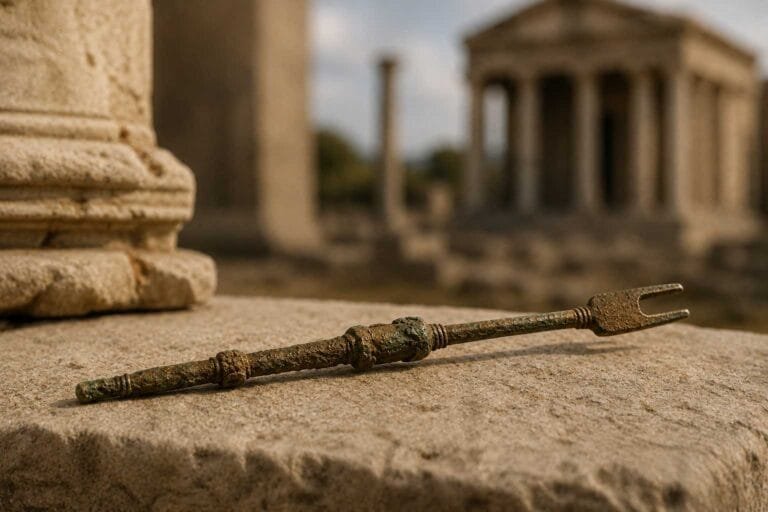
An archaeological team in Bulgaria has announced the discovery of a rare surgical instrument dating back to the Roman era. This instrument was used for performing bladder stone extraction surgeries. Moreover, this discovery represents a qualitative addition that opens a window into the advanced level attained by medical and surgical practices nearly two thousand years ago. It proves that human knowledge at the time was more complex than previously thought.
Precision of Design and Surgical Skill
The tool was found during meticulous excavation work inside a Roman archaeological site. Upon inspection, researchers confirmed that its unique design and precise manufacturing method clearly indicate its use in complex surgical interventions. Consequently, this level of metal engineering reflects the profound anatomical knowledge Roman physicians possessed. In addition, it shows their ability to innovate functional tools suited to the nature of sensitive surgeries. This achievement placed them among the pioneers who laid the first foundations of surgical medicine.
Surgical Challenges in the Ancient World
Bladder stone removal surgeries were among the most difficult and dangerous procedures in ancient times. Surgeons had to complete their work without the aid of modern anesthesia or the sterilization and prevention techniques known today. In light of these harsh conditions, the success of an operation depended entirely on the physician’s exceptional skill and steady hand. The quality of the instruments used was also crucial. This explains the significant importance of this discovery in documenting the courage and competence of medical practitioners in the Roman era.
Documenting the Medical History of the Roman Empire
Researchers point out that this discovery serves as further evidence of the medical renaissance witnessed by the Roman Empire. In that era, physicians used a wide range of metal tools specifically designed to perform precise and comprehensive surgeries. Additionally, these physicians did not stop at practical application alone. They were keen to record their experiences and observations in valuable medical treatises. This contributed to the transmission of this accumulated knowledge to subsequent generations and ensured the continuous evolution of medical sciences.
Future Horizons for Archaeological Research
The importance of this artifact is not limited to its historical value; it provides essential information about the development of medical sciences in ancient Europe. Furthermore, it helps researchers understand the nature of therapeutic practices and the level of healthcare available during the Roman era. The tool is scheduled to undergo intensive scientific studies and specialized analyses to determine its exact metallic composition and manufacturing methods before being displayed in a Bulgarian museum. It will serve as a witness to a historical era that proved ancient civilizations possessed the seeds of modern surgical techniques.