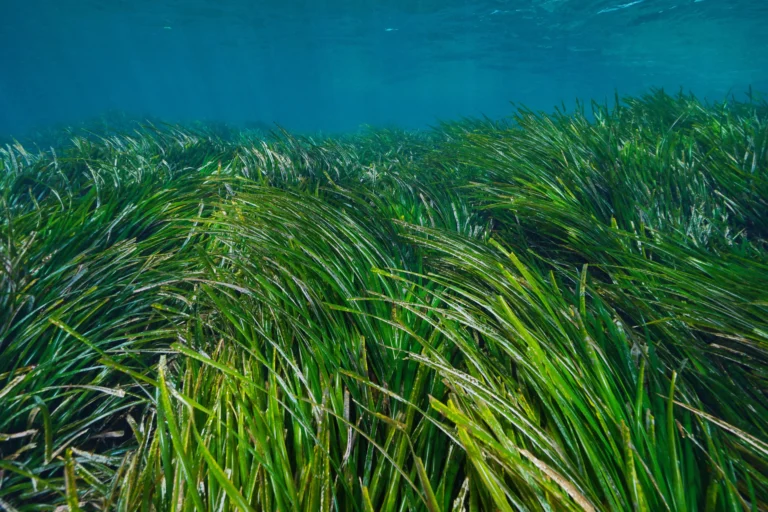
A recent scientific study has confirmed that seagrass meadows, which flourish in shallow coastal waters around the globe, play a pivotal role in maintaining ecological balance and supporting coastal communities. These meadows are considered among the most productive marine ecosystems, contributing significantly to protecting coastlines, enhancing biodiversity, and mitigating the impacts of climate change.
Incubator for Biodiversity
Seagrass meadows provide exceptional natural habitats for thousands of species of fish, crustaceans, and other marine organisms. These unique environments offer safe areas for breeding, growth, and shelter from predators, making them an indispensable element in preserving fish stocks. Consequently, these meadows ensure the sustainability of fisheries that coastal communities rely on directly for their daily livelihoods.
Key Driver of “Blue Carbon”
Seagrass plays a fundamental role in the global battle against climate change, possessing a massive capacity to absorb carbon dioxide and store it for long periods within marine soil, a concept known as “Blue Carbon.” This natural function contributes to reducing the concentration of greenhouse gases in the atmosphere, making their protection an integral part of sustainable global solutions to limit warming.
Natural Shield for Coastlines
These meadows act as a robust natural barrier that mitigates the force of waves and intense marine currents. This property contributes to reducing beach erosion and protecting coasts from the destructive effects of storms and rising sea levels. Beyond physical protection, seagrass improves water quality by trapping sediments and absorbing pollutants and excess nutrients, thereby maintaining the purity of the marine environment.
Challenges and Conservation Efforts
Despite their strategic environmental and economic importance, seagrass meadows face increasing threats due to marine pollution, land reclamation, coastal urban expansion, and rising water temperatures. This has led to the loss of vast areas globally. Researchers are calling for intensified conservation efforts through the establishment of marine protected areas and the reduction of pollution sources, alongside the necessity of launching seagrass restoration projects in affected regions to bolster food security and the blue economy.
Environmental experts believe that preserving seagrass meadows is no longer just an environmental issue; it has become an urgent developmental and economic necessity to ensure the support of coastal communities and enhance the resilience of marine ecosystems in the face of growing future climate challenges.