
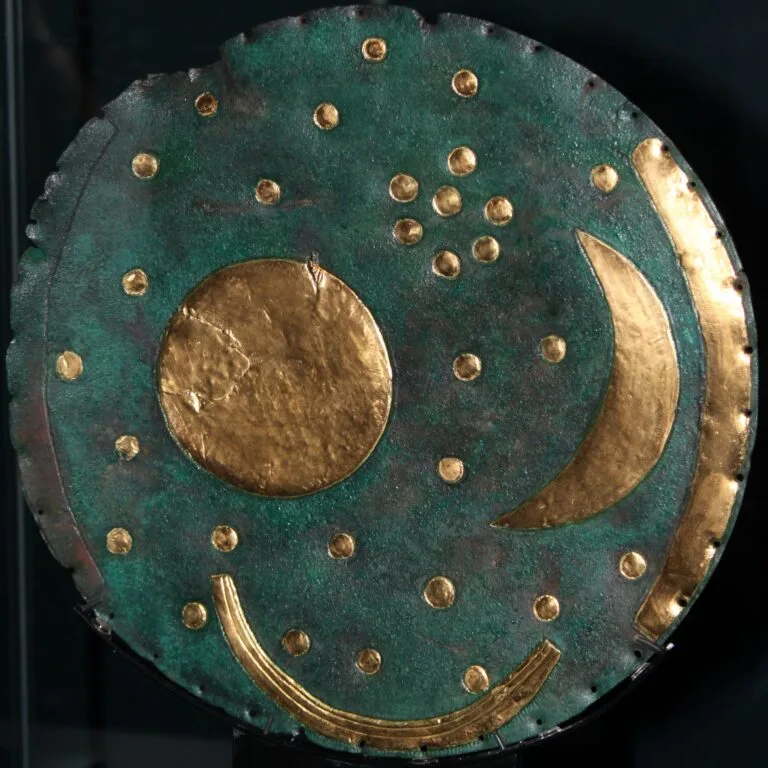
The conjunction of the Moon with the Pleiades star cluster, known to Arabs as “Qiran 25,” represents one of the most prominent astronomical landmarks that ancient Arabs relied on to determine seasonal changes and forecast agricultural, rain, and temperature cycles, long before the advent of modern meteorological tools.
The Natural Calendar in the Eyes of Ancestors
Arabs were renowned for their meticulous observation of the movement of stars and lunar mansions. For them, the sky served as a remarkable natural calendar that helped regulate their daily lives, whether in agriculture, grazing, or during long journeys across the desert. The appearance of the Moon near the Pleiades carried deep seasonal connotations that successive generations relied upon to predict climatic shifts. “Qiran 25” is linked to one of the lunar mansions within a system used by Arabs for centuries, where each conjunction gained special renown through constant observation and accumulated wisdom passed down through time.
The Pleiades and Their Status in Arab Heritage
The Pleiades is one of the most famous star clusters visible to the naked eye, earning it a special place in Arab heritage. It has been mentioned in numerous poems and folk traditions that celebrated its beauty and significance. These stars were linked to the calculation of seasons and “Anwa’a” (star-based seasonal cycles) that residents of the Arabian Peninsula and wide parts of the Middle East relied on to organize their affairs, making the cluster a cornerstone of the region’s cultural and astronomical memory.
Between Historical Legacy and Modern Science
Despite the massive advancements in astronomy and meteorology today, many enthusiasts of heritage and folk astronomy continue to track these phenomena as an integral part of the Arab cultural and scientific legacy. While acknowledging that modern weather forecasting now relies on scientific models and precise digital data, lunar mansions and “Anwa’a” remain a part of authentic historical knowledge, reflecting the precision with which ancestors observed the sky and the natural cycles of the earth.