Athens – Greece – The release of the film “The Odyssey” by global director Christopher Nolan has reopened the historical debate surrounding the persona of “Homer,” the poet credited with crafting humanity’s greatest epics: “The Iliad” and “The Odyssey.” The idea that a single man living on the island of Chios around the 8th century BC managed to weave the myths of the Trojan War and the adventures of Odysseus into two texts of such global impact remains a source of both admiration and perplexity.
The Authorship Debate: The “Homeric Question”
While historians acknowledge that these texts reached us through the efforts of scholars in the Hellenistic and Byzantine eras, there is no definitive proof that Homer is the sole “author.” This brings us to the “Homeric Question”—was Homer one person, or a collection of bards? However, the astonishing consistency in the dramatic and linguistic structure of the texts makes it difficult to imagine they arose solely from oral tradition, strengthening the hypothesis of a brilliant original author who laid the complete framework for these epics that have shaken humanity for over 2,500 years.
The Blind Bard Archetype: Symbolism of Wisdom
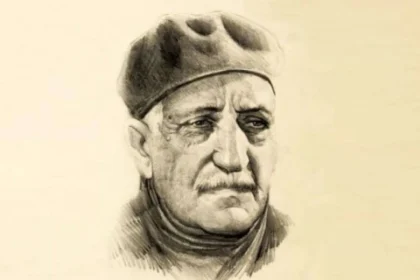
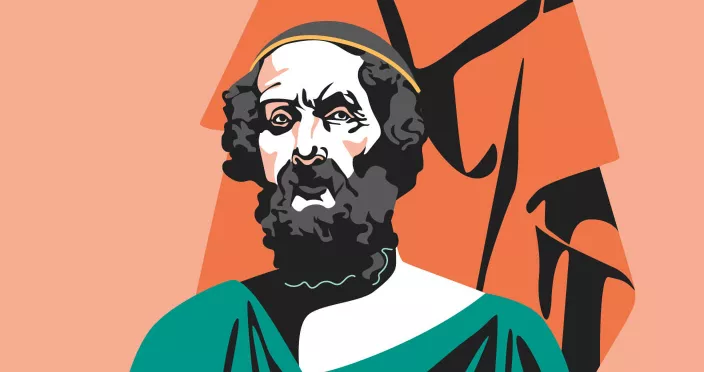
Homer’s image in the collective mind and ancient statues is that of an elderly, bearded man holding a staff, with sunken eyes suggesting either a penetrating gaze or complete blindness. In the cultural context of antiquity, loss of sight was often linked to “insight” or inner vision, as it was believed that those deprived of physical sight were granted divine ability to see truths, the past, and the future.
Evidence Within the Texts
Researchers rely on two primary references to attempt to prove (or disprove) Homer’s blindness, believing he may have embedded details about himself within his works as a literary “signature”:
- The Character of Demodocus: In “The Odyssey,” Demodocus, the blind singer in the court of King Alcinous, appears, described by the text as “a man whom the god robbed of his sight but gifted a sweet voice.” Many critics believe Homer may have been painting a self-portrait through the character of this bard.
- Homer’s Hymn to Apollo: One of the hymns attributed to the Homeric tradition explicitly refers to “a blind man living in rocky Chios.” Despite academic doubts regarding the attribution of these hymns to Homer himself, they carry two characteristics that match historical accounts about him: being from the island of Chios and suffering from blindness.
An Eternal Legacy Beyond the Physical
Ultimately, the question of Homer’s sight remains a historical mystery impossible to settle scientifically, which is part of the charm of this enigmatic figure. Nevertheless, the global community has chosen to accept the image of the “blind storyteller”; it is an image that imparts an aura of sanctity and wisdom upon this literary treasure. Whether Homer saw clearly or his world was pitch black, his artistic vision transcended the boundaries of time and space, becoming the primary reference for human drama and literature throughout the ages.