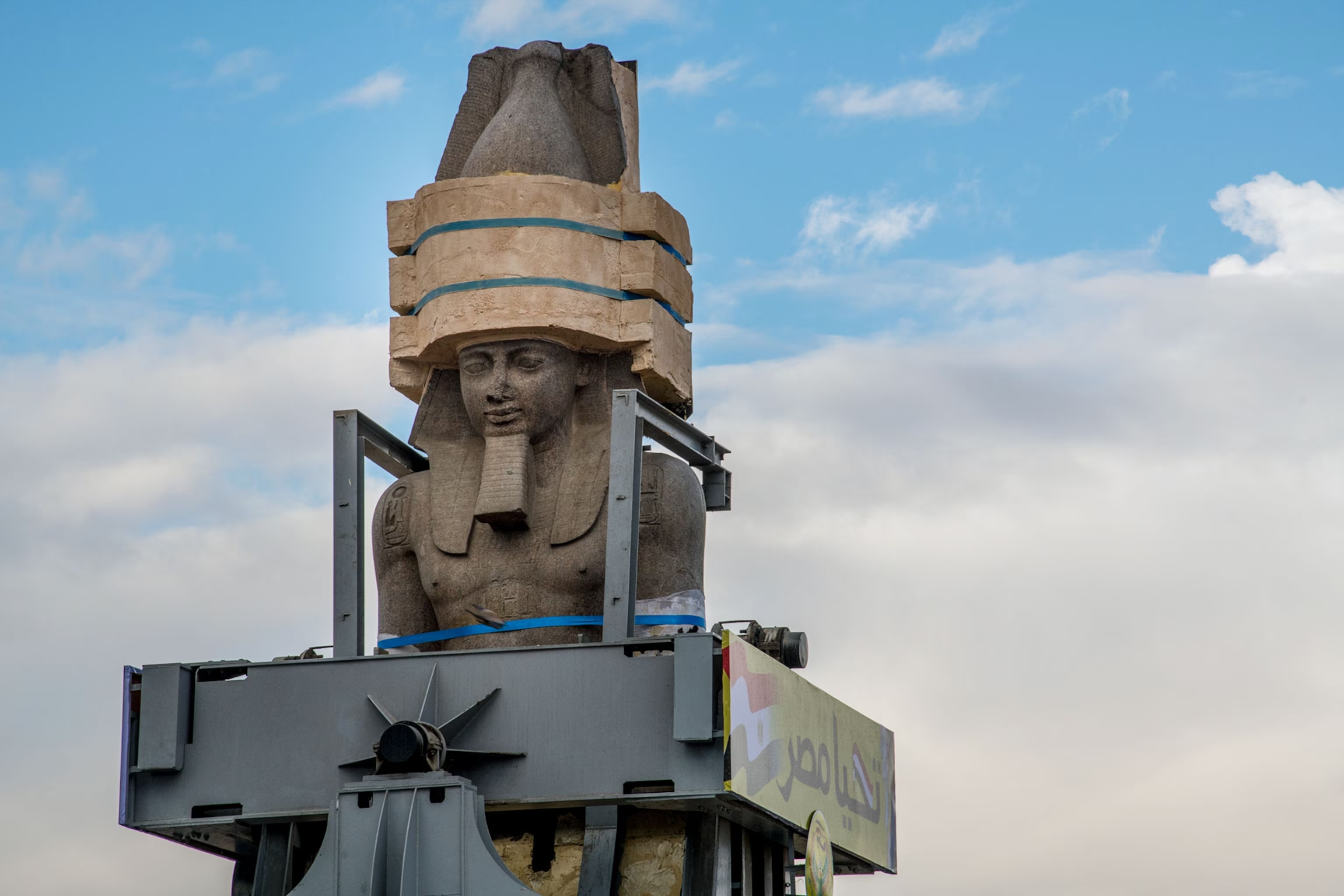
Cairo – Recent archaeological studies have once again shed light on one of the most impressive issues in the history of ancient Egyptian architecture: how the Pharaohs managed to transport colossal statues and obelisks, led by the statues of King Ramses II, over long distances across the arid desert before proudly erecting them in temples and royal squares. These researches revealed that this complex process did not rely solely on brute human strength, but was based on highly advanced engineering and mechanical techniques relative to their era.
Sand Wetting Technique to Reduce Friction
Archaeological research and modern scientific experiments have shown that the ancient Egyptians invented a brilliant physical solution for transporting stone blocks, some of which weighed tens of tons. They relied on massive wooden sleds to which the statues were bound, while workers poured precisely calculated amounts of water onto the sand in front of the sled. Experiments have proven that this process alters the nature of the sand and significantly reduces friction forces, halving the effort required to pull heavy loads. This theory is documented by wall paintings discovered inside Pharaonic tombs.
Prepared Paths and Integrated Logistical Stations
Egyptian ingenuity was not limited to pulling techniques but extended to comprehensive logistical planning. Archaeological evidence indicates that Pharaonic engineers paved special paths and roads to penetrate the desert, equipped with rest stops and water supply points. This early infrastructure helped ensure the continuity and smooth flow of transporting stones and statues from the granite quarries of Aswan in the south to various construction sites scattered across the country.
Ramses II.. An Architectural Legacy Immortalizing Innovation
King Ramses II, one of the most prominent kings of the Nineteenth Dynasty, is considered an icon of building and construction in ancient Egypt. He left a massive legacy of temples and statues, foremost among them the Abu Simbel temples and the Ramesseum. Archaeologists believe that the survival of these monumental structures to this day not only testifies to the greatness of sculpture but also confirms the Egyptians’ precise knowledge of material properties, mechanics, and advanced major project management skills. The journey of Ramses II’s statues across the desert remains compelling evidence that the Egyptian civilization derived its immortality from a unique blend of science, organization, and innovation.