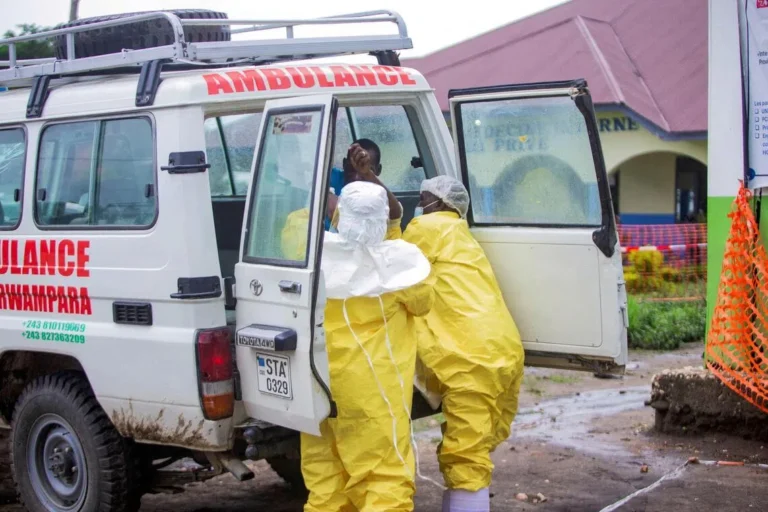
Kinshasa – Amid mounting health concerns, authorities in the Democratic Republic of Congo have announced an alarming rise in the death toll from the Ebola outbreak, with fatalities nearing 600. This increase comes amid widespread mobilization and intensive efforts by health authorities. Authorities are working in close collaboration with international organizations to contain the epidemic. Furthermore, they aim to prevent its spread to new geographical areas. Otherwise, a larger humanitarian catastrophe could be threatened.
Intensifying Medical Response and Epidemiological Investigation
Medical response teams are racing against time by intensifying epidemiological investigations and contact tracing. At the same time, they provide urgent care to patients. They also launch extensive awareness campaigns targeting local communities. Ebola is classified as one of the most dangerous viral diseases globally, transmitted simply by touching the bodily fluids of an infected person or contaminated surfaces. Its initial symptoms range from high fever and fatigue to muscle aches. However, these symptoms can rapidly progress to severe health complications. This can be fatal if necessary medical care is delayed.
International Support and Expanded Vaccination Campaigns
To counter this imminent threat, health authorities have expanded vaccination campaigns to include the most vulnerable groups and frontline workers. In parallel, they support medical centers with specialized personnel and essential supplies. In this context, the World Health Organization and its partners are stepping up technical and logistical support. At the same time, they are developing epidemiological surveillance systems. In addition, they are training local staff on the latest diagnosis and isolation protocols. They emphasize that early detection and community awareness are the fundamental pillars to curb the spread of the deadly virus.