Washington – In a development reflecting escalating tensions over digital content regulatory policies, the US State Department expressed serious concern over South Korea’s recent amendments to its Information and Communications Network Act. Washington warned that the strict application of these regulations could lead to excessive regulation that threatens online freedom of expression and imposes heavy, unjustified burdens on global tech companies operating in Seoul.
Fears of Excessive Censorship and Legal Burdens
A US State Department spokesperson stressed in official statements issued on July 9 that law enforcement tools must not be used as a veiled means to impose censorship. The spokesperson confirmed the United States’ rejection of any legislative approach that imposes excessive burdens on American tech companies operating in the Korean market, expressing Washington’s desire for continuous engagement with the Korean government to ensure the law’s application does not stifle freedom of expression, while affirming a shared commitment to creating a free and open digital environment.
The Core of the Legislative Dispute Over Misleading Content
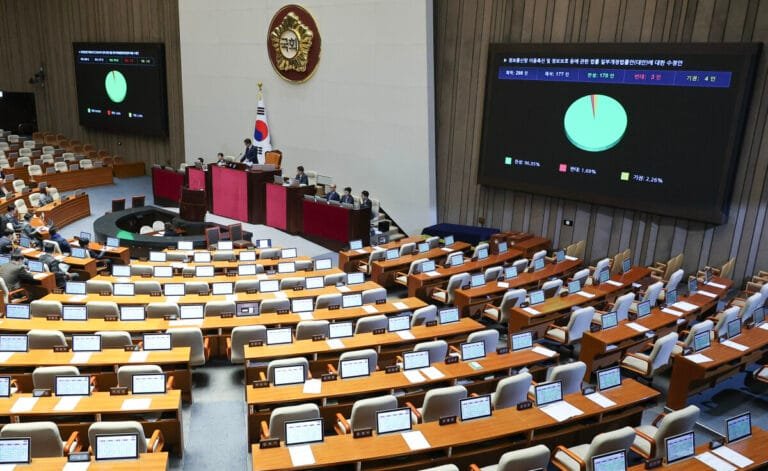
The controversial law, which went into effect on July 7, fundamentally focuses on banning and penalizing the publication of what is classified as false and misleading information. The legislation imposes strict legal obligations on large digital platform operators, compelling them to delete any content classified as illegal or false. The US administration, under the Trump administration, fears that these broad and vague terms will open the door wide to comprehensive self-censorship by giant platforms like Meta and Google, which could hinder the global digital work environment and contradict the democratic principles of freedom of expression.
Ongoing Diplomatic Dialogue to Ensure Legislative Balance
These US statements did not emerge in a vacuum but represent the continuation of intensive diplomatic efforts led by Sarah Rogers, Under Secretary of State for Public Diplomacy, who clearly raised these concerns during her visit to South Korea last April. The US spokesperson described the talks with Korean officials as productive, praising the high level of understanding shown by the South Korean side regarding the potential risks of vague texts that might drive platforms to overzealously delete content to avoid severe penalties. Washington hopes these discussions will result in aligning local regulations with international standards supporting the free flow of information, with Seoul committing to continued active engagement with affected companies to ensure a balanced legal application that does not compromise fundamental digital rights.