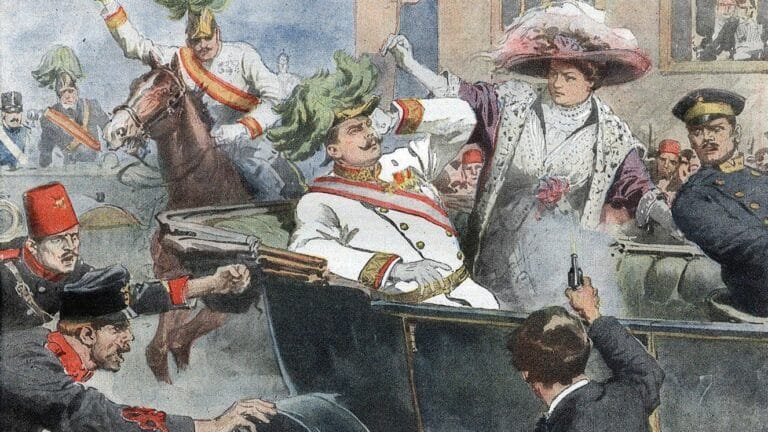
Sarajevo, Bosnia and Herzegovina – Today marks the anniversary of the assassination of Archduke Franz Ferdinand, heir to the Austro-Hungarian Empire, on June 28, 1914. Historians view this incident as the direct and primary spark for the outbreak of World War I, as it led to an escalation of major political and military tensions among European powers, placing the continent on the threshold of a radical historical transformation that reshaped the entire 20th century.
Assassination Details and Diplomatic Crisis
Archduke Franz Ferdinand and his wife Sophie were killed during an official visit to Sarajevo by Bosnian Serb student Gavrilo Princip, who belonged to a nationalist organization seeking to end Austrian influence in the Balkans. This assassination triggered a sharp diplomatic crisis, prompting the Austro-Hungarian Empire to declare war on Serbia, a decision that triggered a series of mutual military alliances among major powers, rapidly expanding the scope of the conflict.
From Local Crisis to Devastating Global War
Within a few weeks, major powers were engulfed in war, turning a local crisis into the first world war in modern history, which lasted until 1918. This war resulted in the deaths of millions, the collapse of major empires, and the complete redrawing of Europe’s political map. The assassination of Franz Ferdinand will remain etched in human memory as one of the most influential events that altered the course of global history in the modern era.