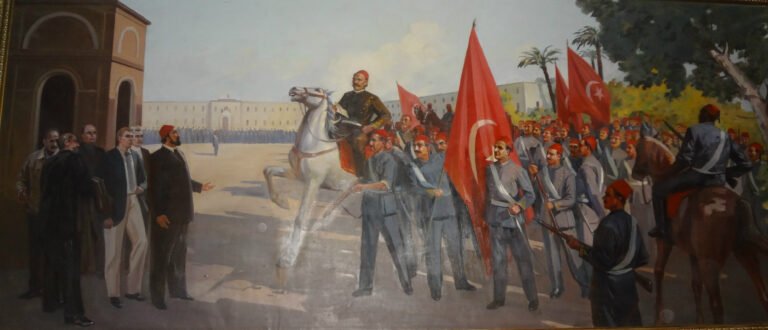
Cairo, Egypt – The name of Khonfus Pasha remains one of the most controversial in the history of the Orabi Revolution, having been linked in popular memory to narratives accusing him of betraying Ahmed Orabi’s forces. This incident is considered one of the most prominent events preceding the defeat of the Egyptian army at the Battle of Tel El Kebir in 1882, and the subsequent British occupation of Egypt for many long years.
Accusations and Historical Perspectives
Historical narratives indicate that Khonfus Pasha, who held a high military position during that period, was accused of leaking strategic information and field movements concerning the Egyptian army to the invading forces. Many historians believe this act was one of the factors that facilitated the British advance and the surprise attack on the Egyptian army at Tel El Kebir. Despite these accusations, debate continues among researchers regarding the accuracy of these accounts, given the differing historical sources concerning the details of the event and the true role played by Khonfus Pasha.
Between Popular Consciousness and Objective Historical Analysis
Despite more than a century having passed since the Orabi Revolution, the name Khonfus Pasha remains synonymous with betrayal in popular consciousness. Conversely, many contemporary historians emphasize that the revolution’s defeat was not the result of a single individual’s actions, but rather the consequence of a complex combination of political, military, and external factors, which ultimately led to the British occupation of Egypt and their control over the country for many years.