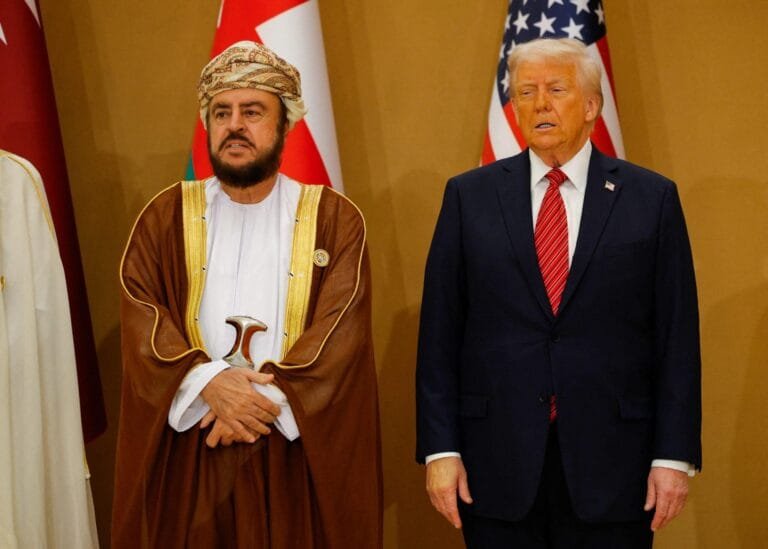
Abu Dhabi, UAE – US President Donald Trump’s threat to bomb Oman is no longer just a passing remark amid the ongoing conflict with Iran; the escalation reveals a broader struggle over the Strait of Hormuz and the future of navigation through it. The conflict also revolves around who has the power to dictate the security and political rules of the game in one of the world’s most vital waterways. In an interview with Fox News on August 17, Trump threatened military action against Oman if it “stood in the way” of US efforts to reopen the Strait of Hormuz. However, he later stated that the United States could deal with Muscat “easily.”
Ironically, Oman is not a direct party to the war, but rather plays a pivotal role in communications between Washington and Tehran. It is also working with Iran on arrangements to allow the resumption of shipping traffic through the Strait. Tehran had previously announced that an agreement with Muscat regarding shipping routes was imminent.
A battle that extends beyond Oman
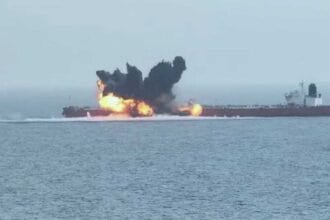
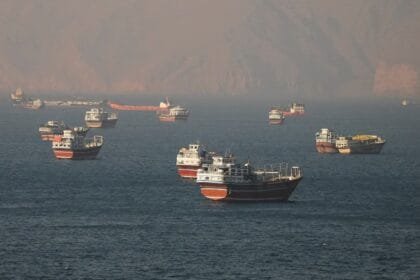
The Strait of Hormuz is at the heart of the crisis. Before the war, nearly 20 million barrels of oil per day passed through it. Data from the U.S. Energy Information Administration indicates that recent historical averages have exceeded 20 million barrels per day. With shipping traffic declining during the crisis, the repercussions of the Hormuz situation have extended beyond the Gulf to global energy markets. Reuters reported that the number of ships transiting the strait over the weekend plummeted, coinciding with the stalled U.S.-Iranian negotiations. Therefore, the real conflict is not simply about reopening the strait, but about who sets the rules of navigation through it, and also about who holds the leverage over global energy flows.
Why Oman?
Muscat’s strength in this crisis lies precisely in its ability to communicate with opposing sides. Oman has maintained channels of communication with both Iran and the United States, becoming a key mediator in the Iranian issue. Today, it faces a difficult dilemma: preserving its relationship with Tehran, avoiding a confrontation with Washington, and simultaneously preventing the Strait of Hormuz from becoming an open battleground.
Herein lies the paradox:
The very advantage that gave Oman its diplomatic influence has become a source of pressure. Muscat’s success in reaching arrangements with Iran regarding navigation could bolster a diplomatic solution. However, it could also clash with the American vision of reopening the Strait on Washington’s terms.
The Gulf faces a new test
Any military escalation around Oman or the Strait of Hormuz will not remain confined to those two countries. The UAE and Saudi Arabia have some alternative routes for exporting oil away from the strait. However, their bypass capabilities are insufficient to fully compensate for the usual flows through it. The International Energy Agency confirms that the region’s capacity to bypass Hormuz is limited compared to the volume of oil that passes through it. Moreover, the majority of oil passing through the strait is destined for Asian markets, making China, India, and Japan among the economies most vulnerable to any prolonged disruption to shipping. Consequently, any large-scale confrontation would quickly transform from a Gulf crisis into a global energy and economic crisis.
China enters the scene through the energy gateway
The longer the Hormuz crisis persists, the greater the importance of China, as one of the biggest beneficiaries of stable Gulf energy flows. However, Beijing’s involvement does not necessarily mean a military confrontation with Washington; its diplomatic and economic role is more likely to increase in order to push for stability in maritime navigation. This is especially true given that the continuation of the crisis threatens supply and energy chains in Asia. Thus, the Hormuz crisis is gradually transforming into a test of the balance between American power, Iranian influence, Gulf interests, and the Chinese presence.
Possible Scenarios
First: The Hormuz Deal
Omani-Iranian mediation succeeds in gradually restoring navigation, and US-Iranian negotiations return to their course.
Second: Settlement under pressure
Navigation partially resumes, but the strait remains subject to high military and political tension.
Third: Mediation collapses
Negotiations fail, and the US threat to Oman escalates into military action, coinciding with Iran adopting a more aggressive stance in the Strait of Hormuz. This is a possibility warned against in statements reported by Reuters, citing an Iranian official.
The real story is not that Trump threatened Oman.
The story is that the Gulf state, which built its influence on dialogue and mediation, now finds itself at the heart of a conflict over one of the world’s most strategic waterways. If Omani mediation transforms from a tool for resolving the crisis into a cause of conflict, the danger will not be confined to Muscat.
The bigger question will be: “Can the Gulf maintain Hormuz as an international shipping lane, or will the strait turn into an arena of military influence where rules of navigation are imposed by force?” If the second scenario occurs, the threat to Oman will be nothing more than a sign of the beginning of a new security phase in the Gulf.