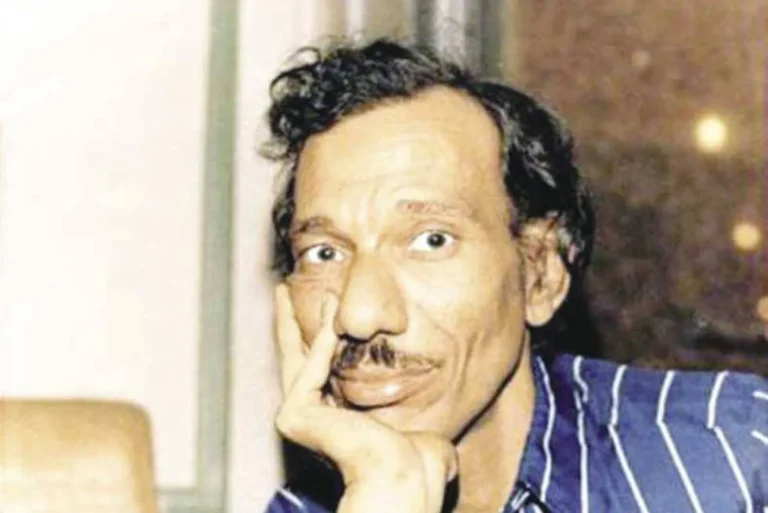
Cairo, Egypt – One cannot discuss the evolution of the modern Arabic poem without pausing at the experience of the Egyptian poet Amal Donqol. This unique voice embodied a remarkable transformative path, starting from rhythms that touched the traditional romantic spirit and culminating in the invention of “confrontation poetry,” which became the hallmark of linguistic and political rebellion.
The Beginnings: A Foundation in Classical Rhythm
In the early stages of his poetic career, Amal Donqol was closer to traditional meters and the prevailing lyrical atmosphere. During that phase, his interest focused on constructing the poem according to classical rhythmic structures, influenced by the romantic climate that dominated the Arabic poetic landscape at the time. Poetry was, at that stage, a means of expressing the self and its individual emotions, before existential anxiety and reality pushed him to alter his path.
The Shift Toward “Free Tafila” and the Shocking Image
As his experience matured, Amal Donqol began the process of “breaking the pattern” gradually. He moved toward the free Tafila (foot), abandoning verbal ornamentation in favor of a language characterized by density and rigor. The poem was no longer merely a reflection of feelings; it became a tool for confrontation and shock. This shift placed Donqol at the forefront of resistance poets, especially with the 1967 defeat, which was a pivotal turning point in his poetic history, where the poem became a cry in the face of historical disappointment.
The Dialectic of Continuity: Romanticism within “Confrontation Molds”
Critics point out that Amal Donqol’s transformation was not a final break with his roots, but rather a recycling of his early aesthetic repertoire. The “romantic sense” remained alive in the essence of his poetry, but it shifted from being an end in itself to becoming a means of imparting deep human melancholy to his sharp confrontation poems. Donqol’s brilliance lay in his ability to combine apparent simplicity with profound semantic depth, which made his poems touch the collective anxiety of the Arab individual.
A Complete Poetic Experience
Scholars believe that Amal Donqol transcended the classification of a “political poet” to become a complete poetic experience. His development was a natural growth that began with lyrical romanticism, passed through the ordeal of the Naksa (defeat), and ended with a poetry of confrontation that never lost its sensitivity toward language, rhythm, and innovative imagery.
Amal Donqol’s experience remains a testament that poetry is not merely words, but a living organism that breathes and transforms with the pulse of the era. He blended rhythm with emotion and romanticism with rebellion, leaving behind a poetic voice that still echoes in the Arab cultural memory, bearing witness to the power of the word when it becomes a stance.