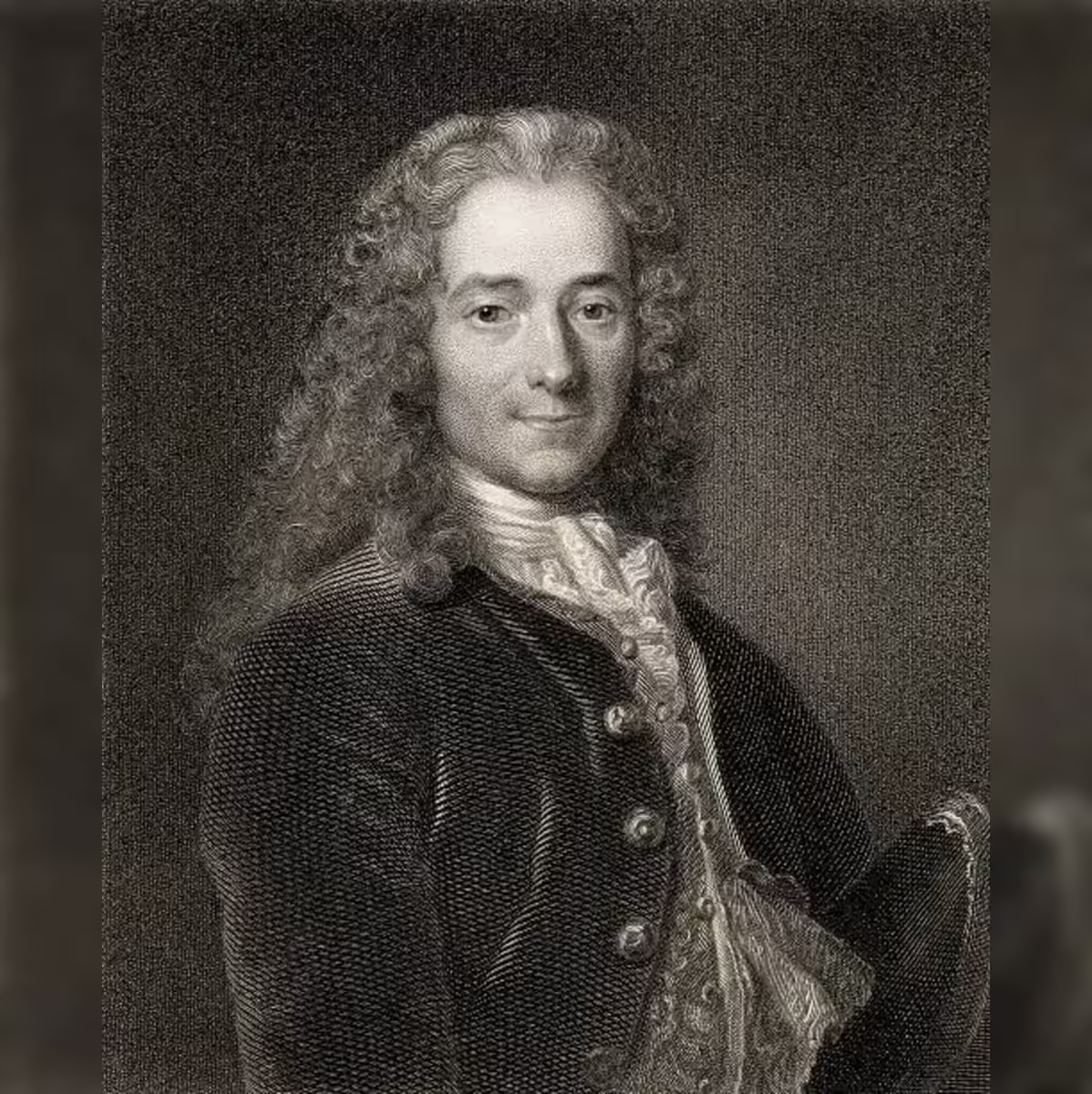
Paris – France — The French philosopher Voltaire stands out as one of the most prominent icons of the European Enlightenment during the 18th century. His name has become indissolubly linked with the defense of freedom of thought and expression, and confronting religious and political intolerance, establishing him as one of the most critical voices that reshaped modern European consciousness.
Upbringing, Satire, and Intellectual Exile
Voltaire was born in 1694 AD in Paris under the birth name “François-Marie Arouet.” He grew up in a French socio-political environment characterized by intense intellectual and political conflicts pitting royal absolutism and the Church on one side against emerging philosophical movements on the other. This volatile climate was heavily mirrored in his later philosophical doctrines, which were marked by sharp criticism of unchecked power and an absolute advocacy for rationalism.
Voltaire emerged as a masterfully satirical writer and thinker who deployed literature, theater, and philosophical essays as sharp weapons to attack tyranny and champion the core values of liberty. He authored dozens of landmark texts tackling concepts of justice, freedom of belief, and human rights, most notably Philosophical Letters, a work that sparked widespread and stormy controversies across France and Europe. Due to his audacious views that challenged the status quo, Voltaire faced exile and imprisonment on multiple occasions. However, these judicial persecutions failed to deter his intellectual activism; instead, they fortified his resolve to confront the suppression of reason and basic liberties. During his periods of exile in England, he was profoundly influenced by the British political framework, particularly concerning freedom of the press and religious tolerance—elements that vibrantly permeated his subsequent masterpieces.
Defending the Oppressed and the Legacy of Tolerance
Moving beyond mere academic theorization, the philosopher played a prominent active role in defending victims of judicial corruption. Among his most famous humanitarian interventions was the “Calas Affair,” in which he fiercely defended a French family unjustly accused due to systemic bigotry, rendering him a living symbol of human justice confronting institutional prejudice and ignorance.
Voltaire is famously credited with the immortal quote that epitomizes his strategic philosophy on tolerance and pluralism: “I may disagree with what you have to say, but I shall defend to the death your right to say it.” This foundational maxim later evolved into one of the most celebrated global slogans for freedom of thought in the contemporary era.
An Enduring Legacy and Sovereign Ideas
Voltaire passed away in 1778 AD, yet his enlightening ideas remained forcefully alive within Western civilization. His philosophies served as crucial blueprints that cleared the path for the massive intellectual and political upheavals across the European continent, chief among them the French Revolution, which deeply drew its principles of liberty, equality, and anti-tyranny from his structural teachings.
Today, Voltaire continues to be studied globally as a foundational pillar of modern philosophy, a historic monument for leveraging the free word and enlightened reason against intolerance and injustice, and an indispensable voice in the European Enlightenment matrix that permanently altered the course of human history.