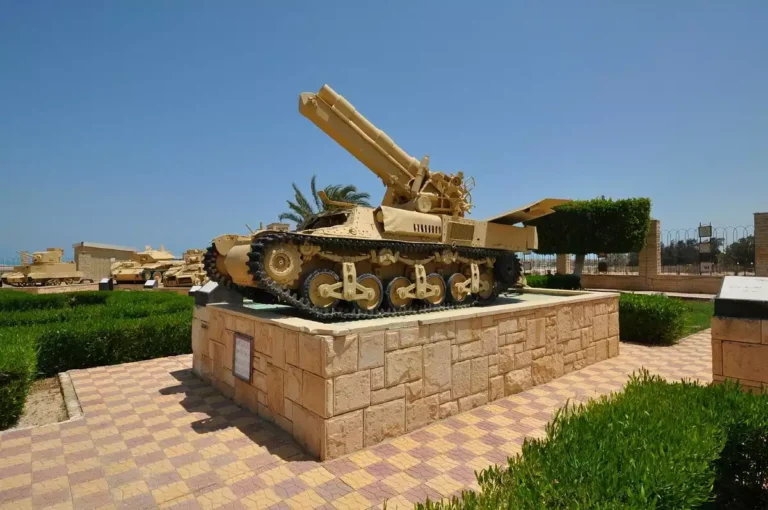
Al-Alamein – Egypt — The Al-Alamein Military Museum stands out as one of the most prominent and significant historical museums in Egypt and the wider Arab region. It meticulously chronicles the events of the famous Battle of Al-Alamein. This battle served as a crucial and decisive turning point during World War II. The museum safeguards thousands of authentic artifacts, military hardware, and rare wartime documents. These items narrate the intricate details of the fierce conflict waged on Egyptian soil between Allied and Axis forces during the 1940s.
Strategic Geopolitics and Comprehensive International Pavilions
The museum is located in the coastal city of Al-Alamein on the northwestern coast of Egypt. It is situated within the exact geographic theater that witnessed one of the most brutal military engagements in modern history. During this period, the Egyptian Western Desert was transformed into an open strategic chessboard for a massive collision between British forces and their allies on one side. On the other, the German and Italian legions commanded by the “Desert Fox,” German Field Marshal Erwin Rommel, occupied the battlefield.
The complex houses an extensive collection of heavy and light weaponry utilized by the warring factions throughout the fighting. This includes vintage tanks, artillery field guns, and armored personnel carriers. Other exhibits feature genuine military uniforms and intelligence field maps. In addition, rare photographs and tactical documents capture the daily logs of combat and the harsh life of the soldiers who served on the North African front. Furthermore, the museum features dedicated national pavilions representing the primary sovereign armies involved. These pavilions exhibit exclusive relics from Egyptian, British, German, and Italian divisions, thereby offering visitors and researchers a holistic, academic look into this bloody chapter.
A Crucial Turning Point and a Gateway to the Future
The Battle of Al-Alamein holds an exceptional rank in global military history. Chroniclers classify it as the strategic barrier that halted the Axis advance into the Egyptian heartland and the geostrategic assets of the wider Middle East. As a result, this battle ultimately cleared the path for a chain of successive Allied victories. These victories endured until the final surrender of the Axis powers. The institution’s mandate transcends the mere static display of arms. It actively functions to preserve the living historical memory of the era, supplying documented educational narratives for younger generations concerning the humanitarian, political, and military fallout of the war.
Amidst the massive urban and economic developments reshaping the modern city of “New Al-Alamein” as one of Egypt’s prominent future smart cities, the museum gains additional significance as a structural bridge. It connects the region’s war-torn past with its prosperous developmental present. It stands as an enduring monument to a transformative historical epoch, even as the landscape transitions toward massive touristic, commercial, and urban investment networks. Additionally, The Al-Alamein Military Museum continuously attracts global tourists, history enthusiasts, and academic researchers from across the globe. It remains the faithful custodian of World War II memories on Egyptian soil and immortalizes a battle whose tactical blueprints are still actively studied in elite military academies worldwide.