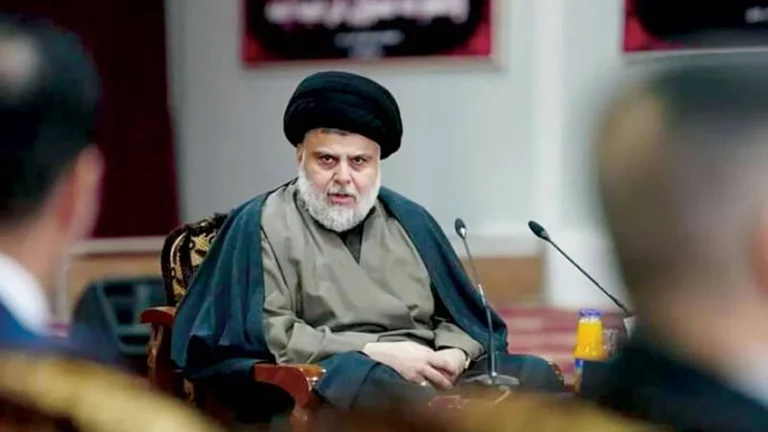
Baghdad, Iraq – Muqtada al-Sadr, the leader of the Sadrist movement in Iraq, called on the Iranian Revolutionary Guard and Iraqi militias on Wednesday not to be drawn into any military escalation that would drag the country into the throes of war, demanding that the government impose security and full sovereignty hours after extensive airstrikes targeted headquarters belonging to the Popular Mobilization Forces.
A call for calm and a rejection of the exploitation of Iraqi lands.
In a statement published on his official account, al-Sadr affirmed that Iraq “would not have been a launching pad for attacks against the Islamic Republic were it not for the actions of the Revolutionary Guard,” emphasizing that “unruly militias should not be given a pretext to target Iraq.” He called on all parties to “embrace the spirit of brotherhood and peace,” rejecting any targeting of Iraqi territory from any quarter, and stressing the government’s responsibility to enforce sovereignty and prevent the country from sliding into a destructive regional conflict.
Heavy toll from airstrikes and targeting of the Popular Mobilization Forces
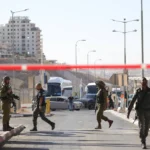
These political stances come at a time when the Popular Mobilization Forces (PMF) announced the deaths of 20 of its members and injuries to 32 others in an initial count of airstrikes targeting its headquarters in several Iraqi provinces, including Baghdad, Wasit, Nineveh, Basra, Kirkuk, Karbala, and Diyala. These strikes coincided with a sharp escalation in diplomatic and security tensions between Baghdad and Riyadh, as the Saudi Ministry of Defense announced that drones launched from Iraqi territory had targeted oil facilities within the Kingdom.
Emergency security meeting in Iraq
On the official government level, amidst these rapidly evolving field and political developments, Prime Minister and Commander-in-Chief of the Armed Forces, Ali Faleh al-Zaidi, directed the convening of an immediate emergency meeting of the National Security Council. The meeting aimed to discuss the repercussions of the recent airstrikes and the necessary steps to address the serious security developments. The Council was expected to issue an official statement outlining the outcomes and decisions taken regarding the current crisis. For his part, the Secretary-General of the Gulf Cooperation Council, Jassem Mohammed al-Budaiwi, condemned the attacks, accusing Iraqi factions loyal to Iran of being behind them, and affirming the Gulf states’ absolute support for all measures taken by Saudi Arabia to protect its security and stability.