Washington, United States – The administration of US President Donald Trump announced a ban on the import of new humanoid robots manufactured abroad into the United States, claiming they represent “unacceptable risks” to US national security, in a new escalation in the heated technological and trade competition between Washington and Beijing.
Details of the comprehensive ban and its scope of application
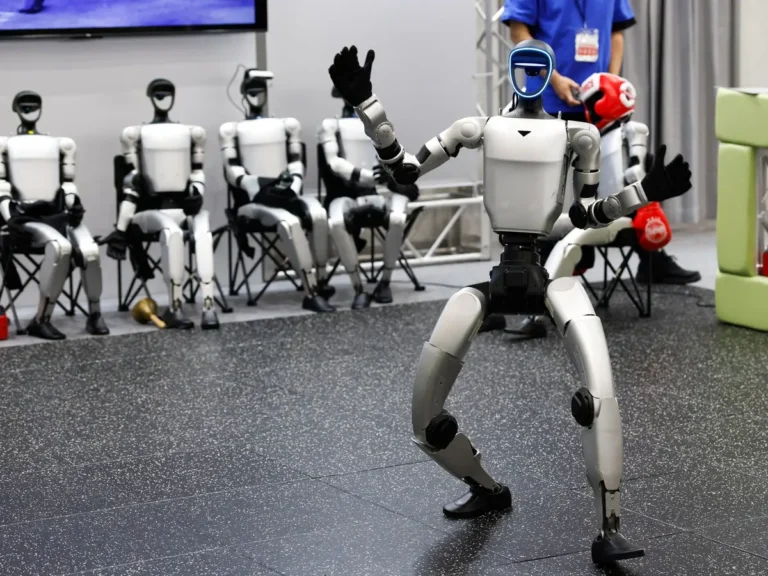
This stringent regulatory measure includes advanced robots, specifically humanoid robots and quadrupedal machines, many of which are manufactured in China, which is engaged in a fierce race with the United States in the development of artificial intelligence and robotics.
In parallel, the Federal Communications Commission (FCC) issued an additional ruling banning the import of power inverters, vital devices used in data centers and solar panels, deeming them a significant threat to the U.S. economy and supply chains.
The Federal Communications Commission (FCC) has added these new products to its list of restricted goods and services, an official register of items deemed a threat to national security. The ban applies only to new, advanced robotic devices and machinery manufactured abroad and to power converters, meaning it does not prohibit the sale or import of existing models that have received prior FCC authorization.
Security concerns and cyber espionage
The Federal Communications Commission justified these measures by expressing concern that the use of foreign-made inverters and power converters would allow foreign companies to remotely shut them down, steal sensitive data, or facilitate hacking and surveillance by “foreign government entities, or otherwise exploit them through cyberattacks.”
Regarding imported humanoid robots, the agency warned that relying on them could give “malicious actors the ability to monitor Americans, enhance foreign intelligence capabilities, or remotely control those robots.” For his part, Federal Communications Commission Chairman Brendan Carr affirmed that the agency is fully committed to “securing America’s vital supply chains.”
Sharp Chinese reactions
In response, the Chinese Embassy in Washington expressed its firm opposition to these decisions, emphasizing that Beijing has consistently opposed the United States’ “politicization” of trade issues and the imposition of sanctions based on “baseless pretexts.” The embassy warned that China “will take all necessary measures” to defend its interests, urging the international community to work together to develop artificial intelligence “for positive and beneficial purposes.” It also called on the US administration to “abandon its hegemonic mindset and cease its smear campaign against Chinese companies.”
The context of economic and trade escalation
These restrictions come at a time when Chinese exports are under intense U.S. scrutiny as the Trump administration seeks to address trade imbalances with the world’s second-largest economy. Washington has previously blocked the sale of advanced U.S. semiconductors to China to protect national security and curb Beijing’s military modernization, while Treasury Secretary Scott Bisent has warned of potential sanctions against Chinese artificial intelligence companies for alleged intellectual property theft.
It is worth noting that Chinese technology companies have made significant strides in developing humanoid robots for factories and homes, and have rushed to market them globally and locally before their American competitors such as Elon Musk’s Tesla and Boston Dynamics, which has increased fears of technological dominance in global markets.