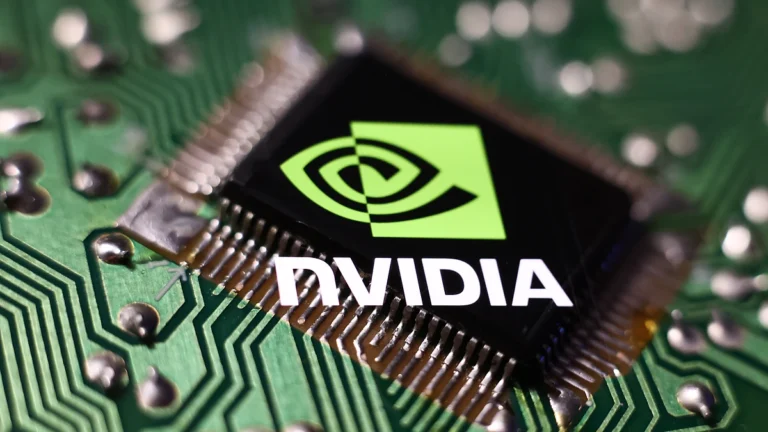
California – United States — NVIDIA, a global leader in semiconductor design and artificial intelligence technologies, has announced the development of a next-generation class of electronic microchips specifically engineered to power future sixth-generation ($6G$) communication networks. This strategic breakthrough aims to optimize performance efficiency and accelerate the global transition toward a highly advanced international telecommunications infrastructure.
The Accelerated Global Race and In-Chip AI
This milestone materializes amidst an intensifying global race among tech conglomerates to pioneer structural solutions capable of meeting the rigorous prerequisites of next-gen networks. This upcoming communication ecosystem is projected to rely heavily and fundamentally on artificial intelligence, cloud computing, and real-time data processing, unlocking vastly superior connection speeds and near-instantaneous latency benchmarks compared to all preceding network eras.
The Silicon Valley-based titan clarified that the new microchip architecture was custom-tailored to optimize energy consumption efficiency and maximize high-performance computing capabilities across complex, high-density network topologies. These upgrades will seamlessly sustain a suite of complex, mission-critical applications, including smart city frameworks, autonomous self-driving vehicles, and industrial automation networks operating on instantaneous real-time connectivity. NVIDIA further highlighted that the structural design leverages pioneering methodologies in component miniaturization and performance density scaling, alongside embedding native AI capabilities directly into the silicon substrate itself. This allows for a more intelligent, agile, and dynamic orchestration of data traffic routing throughout future network fabrics.
Redefining Connectivity and Sustaining Vital Sectors
Technology sector analysts and tech visionaries argue that the engineering of such hardware constitutes an indispensable foundation in the evolutionary timeline toward the sixth generation. $6G$ networks will transcend the mere delivery of raw data throughput and faster download metrics; they are poised to comprehensively redefine the paradigm of connectivity by merging the digital and physical worlds into a singular, highly immersive, and hyper-integrated ecosystem.
Furthermore, these hardware innovations are expected to serve as a major catalyst for multiple high-tech industries. Chief among these are digital healthcare and remote telemedicine, advanced robotics, and Extended Reality ($XR$) environments. Additionally, these chips will significantly reinforce the capacity and operational bandwidth of hyperscale global data centers, which are becoming increasingly anchored to generative AI models and massive computational workloads.
Commercial Horizons and Long-Term Digital Vision
NVIDIA’s official briefing comes at a time of accelerating international, academic, and industrial alliances striving to establish the foundational benchmarks and global protocols for $6G$ technology. The initial commercial rollouts and market manifestations of this tech are anticipated to materialize over the course of the coming decade, as field trials and lab testing persist in defining the final framework of this promising tech.
The company reinforces that its massive capital allocations and ongoing investments in this domain are deeply rooted in its long-term strategic vision to deploy a global digital infrastructure capable of absorbing the exponential, unprecedented growth in global data volumes and worldwide traffic, ultimately unlocking an entirely new era of unprecedented smart applications and enterprise solutions.