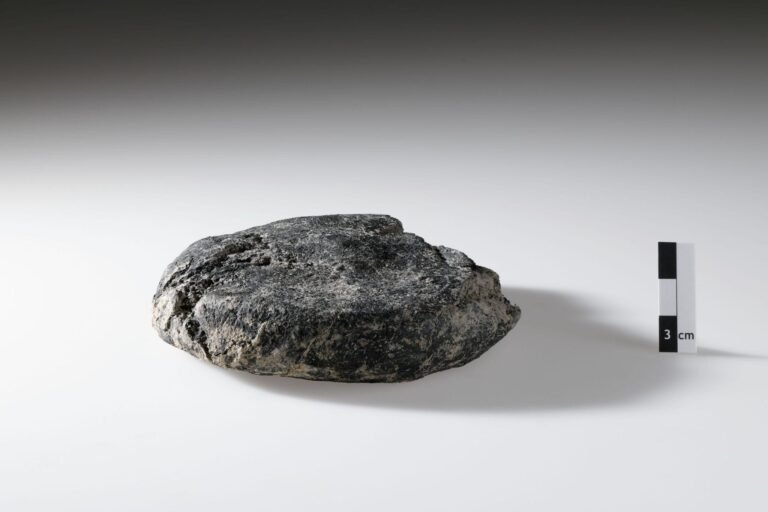
Bern – In a rare archaeological event, scientists in Switzerland have unearthed a loaf of bread dating back approximately 2,000 years, described by experts as a “bite of history” that survived the ages. Obviously, by May 2026, the loaf found inside an ancient Roman camp is not just a piece of food but a living witness to the daily life and military logistics of Roman Empire soldiers in the heart of Europe.
“Under the Microscope”: How Did the Loaf Maintain Its Stunning Shape for Centuries?
The excavation team clarified that the loaf was found in a “semi-petrified” state, which prevented it from decomposing and vanishing over the centuries. Accordingly, scientists were able to observe its original features clearly, including its circular shape and the “portion marks” intended for distribution as fixed rations among soldiers. Clearly, the soil and environmental conditions in this Swiss camp created a “natural vault” that preserved the bread’s components, giving researchers a golden opportunity to study Roman-era cooking and storage methods.
“Feeding Armies”: A Human Window into the Lives of Past Soldiers
Specialists believe this discovery highlights the incredible organizational level of the Roman army, where bread was mass-produced and distributed precisely to ensure soldier readiness during military campaigns. As a result, the loaf is no longer just a silent artifact but a human window telling the story of the soldier who left it behind for some reason. In light of this discovery, archaeologists confirm that studying the nutritional ingredients of this bread will reveal much about the crops grown in that era and the standard of living far from the conflicts of war and politics.