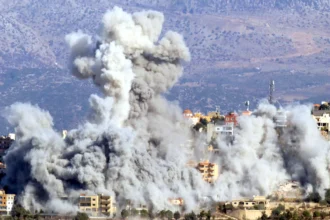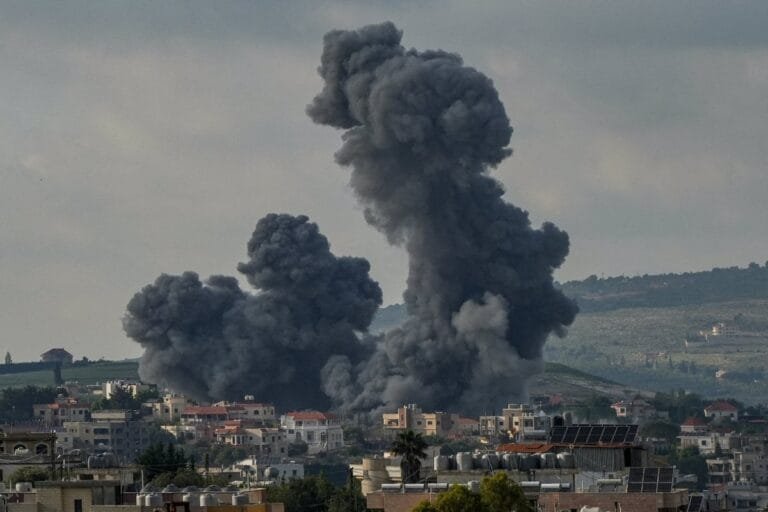
Jerusalem – The northern front has entered a “high-danger zone” following a significant military escalation, as Israeli aircraft launched violent airstrikes targeting the towns of “Majdal” and “Kafra” deep in southern Lebanon. Obviously, by May 2026, the border conflict has taken a more perilous turn; the strikes coincided with sirens blaring across northern settlements and the Galilee region, reflecting a state of “mutual terror” and anticipation of military responses that could shatter the rules of engagement established months ago.
“Under Fire”: Targeting Military Sites and Intensive Aerial Activity
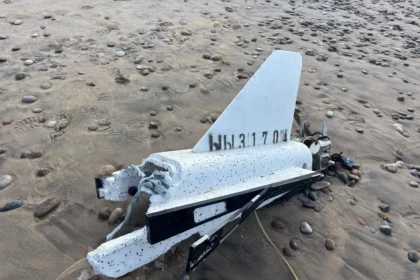
Field sources reported that the Israeli raids focused on destroying infrastructure and sites believed to be used for launching drones and missiles toward Israel. Accordingly, warplanes have not ceased overflights in southern Lebanese airspace, causing displacement and panic among residents. Clearly, Israel seeks through this escalation to send a “decisive deterrence” message, attempting to impose a new security reality that protects its northern borders from infiltration or surprise shelling.
“Open Scenarios”: Will the Region Slide into Full-Scale War?
Military experts believe that activating early warning systems in the Galilee indicates Israel’s expectation of “unconventional” responses from armed factions in Lebanon. As a result, the region stands on the “brink of a volcano,” with the opposing side viewing these strikes as a provocation requiring a parallel response. Amidst this charged atmosphere, international powers are intensifying contacts to cool the front, fearing that any miscalculation could spark a merciless regional war. The question remains: will diplomats succeed where cannons failed, or will the language of weapons decide the outcome?