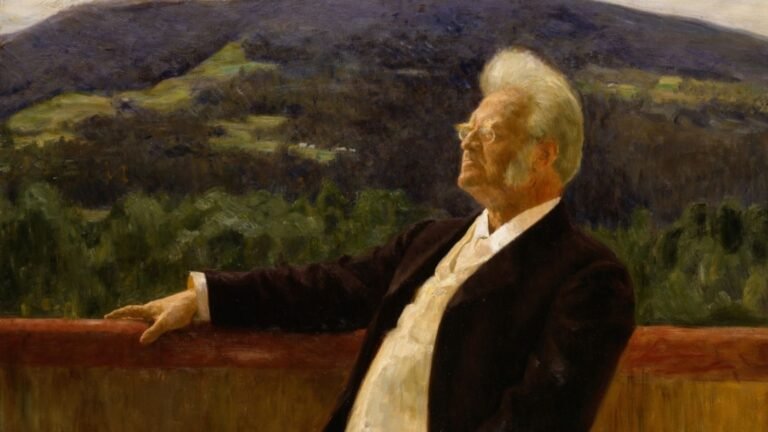
Oslo – Norwegian writer Bjørnstjerne Bjørnson is considered one of Europe’s most prominent literary icons, immortalizing his name as the first Norwegian to win the Nobel Prize in Literature in 1903. Born in 1832, Bjørnson emerged as a multi-talented creator in novels, theater, and poetry, with his works closely tied to national identity and social issues. According to the Nobel Committee, his recognition came in appreciation of his works characterized by “intellectual nobility and artistic honesty,” as he successfully crafted a voice expressing his people’s aspirations during a pivotal historical stage, turning literature into a vivid mirror of human values and dignity.
More Than Just a Writer: Bjørnson’s Role in Shaping Norway’s Democratic Consciousness
Bjørnson’s role did not stop at creative writing; he was a prominent political and cultural driver who fiercely defended the values of democracy and human rights. Obviously, his literary experience was a model that combined art with a mission, as his novels and plays were never detached from the concerns of the common citizen, but rather contributed to shaping national awareness and paved the way for a comprehensive cultural renaissance in his country. As a result, Bjørnson became one of the pillars upon which Norway leaned in its journey toward intellectual and social liberation, granting him a solid place in the memory of world literature.
A Timeless Legacy: How Did Norwegian Words Reach Global Fame Thanks to “The Pioneer”?
Bjørnson’s legacy remains strongly present to this day, as the pioneer who opened doors for Norwegian literature to achieve international recognition. Accordingly, critics believe that Bjørnson’s greatest strength was his belief that the “word” is capable of creating change and building more just societies. Amid the continued celebration of his works, the first Nobel laureate in Nordic history remains a symbol of undying creativity and an example of a writer who chose to be a voice for freedom and justice before being a storyteller.