Paris – The birth anniversary of French artist Eugène Delacroix, the pioneer of the Romantic school, is a reminder of a creator who didn’t just paint canvases but painted the history of nations with bold colors. Born in 1832, Delacroix managed through his vibrant style to transfer human emotions and social conflicts into the heart of art. Obviously, his genius manifested in using color and movement to create unforgettable visual drama, making him one of the most influential artists in the history of world fine arts and a key driver of revolutionary consciousness in his era.
“Liberty Leading the People”: Behind the Scenes of the Painting That United Workers and Intellectuals
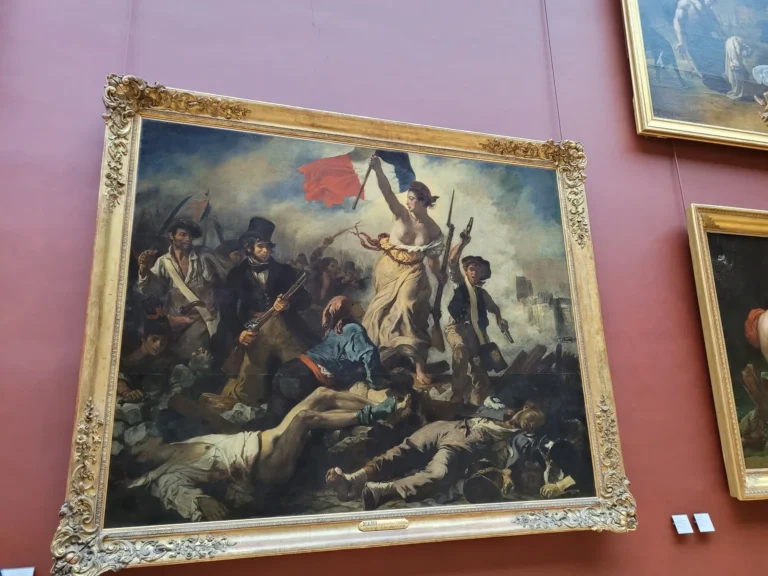
Liberty Leading the People,” painted by Delacroix in 1830, is considered his most famous work, embodying the French July Revolution and the overthrow of the monarchy. The painting depicts a dramatic scene of a woman symbolizing Liberty leading the masses over battle debris while raising the French flag. As a result, the painting carried deep symbolism by bringing together various segments of society—from hardworking laborers to intellectuals—in a single scene reflecting the unity of the people against oppression, granting it historical value that made it a visual reference for all subsequent liberation movements.
Delacroix’s Legacy: Art as a Tool for Political and Social Change in Global Memory
Delacroix’s works were not merely artistic pieces decorating museums; they transformed into global icons from which revolutionary movements worldwide drew meanings of struggle and rights. Accordingly, art historians believe Delacroix succeeded in turning the brush into a tool for political expression, brilliantly blending artistic beauty with a sincere human message. In celebrating his memory, Delacroix’s legacy remains strongly present, reminding us that true art is that which emerges from the womb of suffering to create hope and lead nations toward horizons of freedom and dignity.