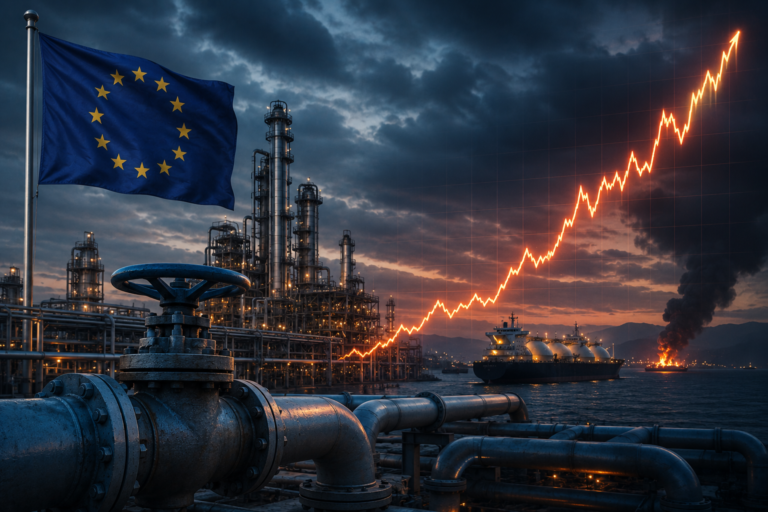
Brussels, Belgium – Natural gas prices in European markets are on track for significant weekly gains. This comes at a time of increasing pressure on energy supplies due to a combination of complex geopolitical factors and a shortage of strategic reserves.
According to a Bloomberg report published on Friday, benchmark natural gas futures continued their upward trend, rising by nearly 7% since last Friday. Prices had reached their highest level in four months on Thursday.
Inventory crisis and supply shortages
This price surge is driven by worrying economic data showing a decline in European gas inventories at rates exceeding analysts’ expectations. Currently, storage facilities across the continent are only 41% full.
This situation puts Europe on the defensive and raises serious concerns among leaders and policymakers about the continent’s ability to meet its energy needs in the coming months. These concerns are heightened by the approaching summer and the increased demand for cooling.
The specter of unrest in the Strait of Hormuz
Amid the geopolitical uncertainty, Bloomberg warned that any potential disruptions to shipping through the Strait of Hormuz, or continued tensions, could trigger fierce and direct competition between European and Asian markets for seaborne liquefied natural gas (LNG) shipments. Such competition would drive prices to new record highs, further exacerbating the economic burden on importing countries.
Global markets are closely monitoring the Iranian nuclear issue and the stalled negotiations with the United States. In this context, financial institutions understand that any development in these negotiations will have a direct and immediate impact on the stability of global energy flows.
Oil prices remain stable amid Lebanese tensions
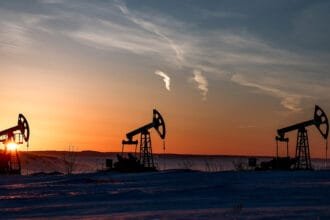
Meanwhile, oil prices stabilized somewhat in trading on Friday morning, after sharp declines in the previous session. This stability comes amid dwindling international hopes for a near-term de-escalation of tensions in the Middle East. This is particularly true following Hezbollah’s rejection of ceasefire proposals in Lebanon.
This cautious fluctuation in oil markets reflects the extent to which traders are affected by the prevailing uncertainty in the region. The security situation in Lebanon remains one of the most significant factors threatening to alter the trajectory of energy prices in the coming period. Consequently, energy markets remain on high alert, awaiting any political breakthrough that could restore balance to global markets.