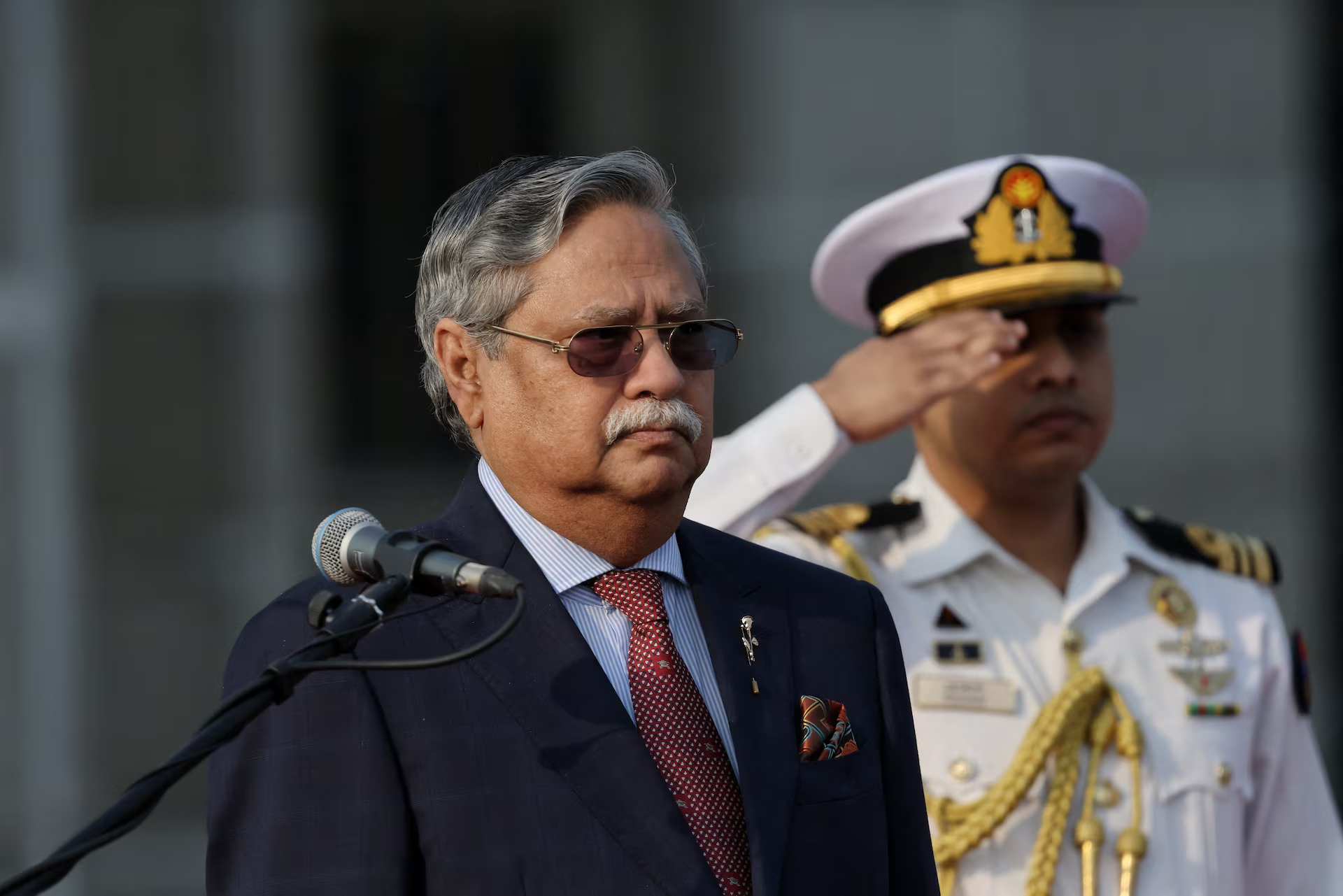
Bangladesh President Mohammed Shahabuddin, who took office under the government of ousted former Prime Minister Sheikh Hasina, is expected to tender his resignation on Friday, sources confirmed, marking a pivotal moment in the country’s political transition.
Bangladesh President Mohammed Shahabuddin, who took office under the government of ousted former Prime Minister Sheikh Hasina, is expected to tender his resignation on Friday, sources confirmed, marking a pivotal moment in the country’s political transition.
Shahabuddin’s anticipated resignation comes following intensified political scrutiny and public calls for his departure, accelerated by recent reports surrounding interactions with the exiled former prime minister.
Under Articles 50 and 54 of the Bangladeshi Constitution, upon the formal submission of a presidential resignation to the Speaker of Parliament, the Speaker assumes the role of Acting President. Parliament is subsequently required to elect a new president within a 90-day timeframe.
Reshaping the Political Landscape
At 76, Shahabuddin remains the last high-ranking constitutional official from the previous administration still in office following the August 2024 political overhaul. Although the presidency in Bangladesh is largely ceremonial with executive authority resting with the prime minister and cabinet, the position holds significant symbolic weight during times of transition.
His resignation is anticipated to clear the path for further institutional realignments as the administration moves to stabilize the political climate and proceed with its transition strategy.
The resignation of President Shahabuddin removes the final constitutional remnant of the previous political era, paving the way for a streamlined constitutional succession and institutional reset in Bangladesh.