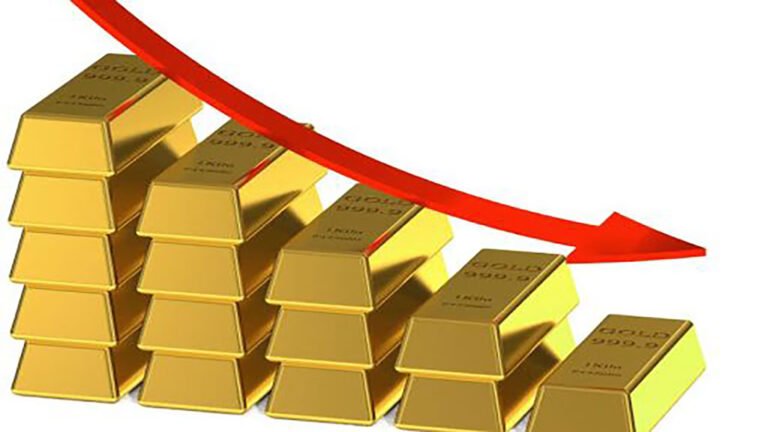
New York, USA – Gold prices fell sharply on Tuesday, pressured by rising global oil prices following the latest US military strikes in Iran. This military escalation not only increased geopolitical risks but also revived fears of a return to alarming levels of inflation, which would likely keep US interest rates high for an extended period. This, in turn, negatively impacted the appeal of the precious metal.
Trading activity and precious metals
By 02:18 GMT, spot gold had fallen 0.7% to $4,537.54 per ounce. Meanwhile, U.S. gold futures for June delivery rose 0.3% to settle at $4,538.50.
Gold wasn’t alone in the decline; other precious metals followed suit. Silver fell 1.8% in spot trading to $76.66 an ounce. Platinum lost 0.9%, reaching $1,950.70, and palladium declined 1.1% to $1,382.42 an ounce.
Oil reacts to “defensive escalation”
Meanwhile, Brent crude futures rose more than 2% in early Asian trading, driven by escalating tensions between Washington and Tehran. This followed what the US described as “defensive” operations in southern Iran, targeting boats attempting to lay sea mines and missile launch sites. These actions occurred despite ongoing diplomatic efforts in Doha between Iranian and Qatari officials to reach an agreement to end the three-month-long conflict.
Kelvin Wong, senior market analyst at OANDA, explained that markets are beginning to grasp the reality that damage to oil production facilities in the Middle East could hinder the return of oil flows to normal levels. This is happening despite cautious optimism surrounding a potential peace agreement. Wong added that this situation increases the likelihood of US interest rates remaining high, which reduces the appeal of gold, a non-yielding asset.
Inflation fears and interest rate pressure
Economic experts believe that rising oil prices represent a new “inflationary pressure” on the global economy, which could prompt major central banks, particularly the US Federal Reserve, to adopt tighter monetary policies. The likelihood of maintaining high interest rates for an extended period increases the opportunity cost of holding gold. Gold typically loses its appeal in a high-interest-rate environment.
With political and military uncertainty persisting, investors are closely monitoring developments in the ongoing talks in Qatar, amid both Washington and Tehran downplaying hopes for an imminent breakthrough. As tensions remain high in the Strait of Hormuz, precious metals markets are on tenterhooks, awaiting clearer signals regarding the future direction of US monetary policy and the extent to which military escalation in the Gulf region will continue.