Moscow, Russia – The Russian Foreign Ministry announced that Moscow will make decisions regarding the continuation of natural gas supplies to European countries based on its own economic and strategic interests. It emphasized that European requests will be handled “on a case-by-case basis.” This move reflects the escalating energy conflict between Russia and the European Union.
Russian criticism of secret European procurement attempts
In an exclusive interview with the Russian news agency RIA Novosti, Dmitry Pereshevsky, Director of the Department for Economic Cooperation at the Ministry of Foreign Affairs, launched a scathing attack on the contradictory stances of some European capitals.
Perieshevsky pointed out that some countries publicly declare their rejection of Russian fuel and refuse to accept it, yet simultaneously attempt to purchase it secretly through back channels.
The Russian official added, “I think the government is considering barring those who are desperately trying to breathe before death. Their unspoken message is: ‘As long as Brussels allows it, we’ll buy something as quickly as possible, but at the same time, we don’t like Russia.'” He asserted that this duplicity has led Moscow to adopt a separate inspection mechanism for each country, based on the dictates of Russia’s own national interest.
A severe energy crisis and a timetable for a European embargo
These stern statements from Moscow coincide with technical reports revealing that European gas reserves in storage facilities have fallen to their lowest level in five years. This decline poses a significant challenge for the continent, especially given the implementation of punitive measures imposed by Brussels and the gradual phase-out of Russian fuel imports.
The Council of the European Union adopted a strict regulation to ban Russian energy supplies. The ban on importing liquefied natural gas (LNG) under short-term contracts came into effect on April 25th. The ban on long-term contracts will begin on January 1, 2027. As for pipeline gas, the ban on short-term contracts is scheduled to begin very soon, on June 17, 2026, followed by the ban on long-term contracts in November 2027.
Russia is turning towards alternative markets and friendly countries.
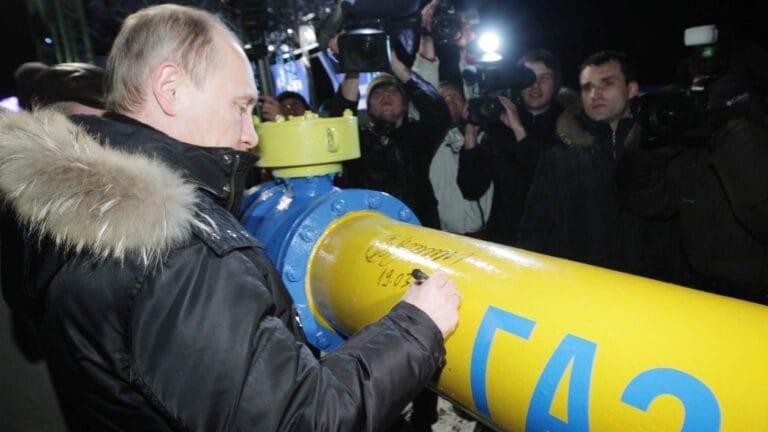
For his part, Russian President Vladimir Putin stated that his country could directly benefit from a cutoff of supplies to European countries as quickly as possible. He explained that Moscow has been planning and preparing for this scenario for some time.
Putin instructed the Russian government to explore and expand export opportunities to promising alternative markets in Asia and the Middle East.
In this regard, Russian Deputy Prime Minister Alexander Novak affirmed that Moscow is fully prepared to redirect its gas supplies only to “friendly countries.” These are the countries that demonstrate a genuine and constructive commitment to long-term economic and trade relations based on shared interests.