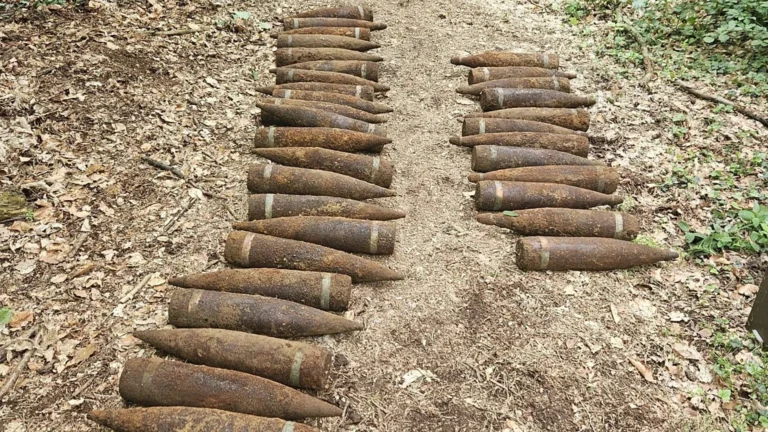
Berlin, Germany — Severe drought waves and raging wildfires across Europe have exposed a dangerous military legacy buried for over eight decades. Extreme weather conditions have unmasked unexploded bombs and ordnance from the First and Second World Wars, creating immediate hazards for residents and emergency responders.
As water levels recede in rivers and lakes, submerged weapons and munitions have resurfaced along previously inaccessible terrain. Local authorities are enforcing strict security protocols to isolate affected zones.
Receding Water Levels and Explosion Risks Amid Wildfires
Safety concerns are escalating as high temperatures and forest fires sweep through historic battlegrounds. Extreme heat drastically increases the instability of buried munitions, prompting officials to seal off contaminated areas until bomb disposal teams can sweep the land.
Explosive ordnance disposal experts face intricate challenges due to metal corrosion and soil shifts over time. Neutralizing these legacy munitions requires specialized handling and advanced detection equipment.
Climate Change and the Challenge of Managing Military Ordnance
Experts emphasize that accelerating climate change alters vegetation and soil structures, accelerating the exposure of wartime remnants. Consequently, European governments face a dual challenge: managing immediate environmental disasters while mitigating lethal war hazards.
Warnings indicate that continued climate instability will likely unearth additional unexploded ordnance across the continent in coming years. Specialized units are intensifying survey operations to mitigate the lingering risks of Europe’s military past.